



SRP governance and elections
Start here to learn about the two organizations that make up SRP and the elections for the Board and Council, held every two years.
The Association and the District
SRP is made up of two organizations. The Salt River Valley Water Users’ Association, also known as “the Association,” is a private water corporation that was formed in 1903. The Salt River Project Agricultural Improvement and Power District, also known as “the District,” is an agricultural improvement district and political subdivision of the State of Arizona that was formed in 1937. Each of these organizations is governed separately.
Learn more about each organization by clicking on the drop-downs below:
The Salt River Valley Water Users’ Association was formed by a group of early Valley residents who were searching for a way to bring water to their families, farms and communities.
These pioneers tried to irrigate crops with a simple canal system fed by the Salt River. Canal operations were unpredictable. Sometimes the river shrank to a trickle, while other times it swelled beyond its banks and washed away a season of hard work.
In 1902, President Theodore Roosevelt signed the National Reclamation Act. The law provided federal loans for construction of reclamation projects in the West. Valley settlers formed the Association in 1903 and pledged their land as collateral for a federal government loan to build a massive water storage and delivery system. The cornerstone of the system, Theodore Roosevelt Dam, was dedicated in 1911.
From 1923 to 1946, five more water-storage dams were built along the Salt and Verde rivers, fed by a 13,000-square-mile “watershed,” or natural drainage area, cooperatively managed by the Association. The duties of this organization have gradually increased over time to satisfy the Valley’s growing need for a reliable source of water.
Today, the Association delivers nearly 1 million acre-feet of water to a 240,000-acre service area in metropolitan Phoenix. The reservoir system feeds an extensive water delivery network made up of 1,265 miles of canals, laterals and smaller channels. This network carries water to cities and towns, as well as agricultural and urban irrigators.
Since its creation, the District has worked hard to provide affordable electricity to retail customers in the Phoenix area.
During the Great Depression, Valley farmers were hard-pressed to make payments on federal loans for Theodore Roosevelt Dam and other dams on the Salt River. To help reduce payments on the outstanding loans, the Arizona Legislature enacted a law in 1936 that allowed the formation of the Salt River Project Agricultural Improvement and Power District in 1937.
As a political subdivision of the state, the District can issue tax-exempt municipal bonds, thereby reducing interest costs and saving SRP electric and water users millions of dollars. It's similar to how your city or local public school district issues bonds to pay for major projects.
As the Valley’s population has grown, the District has tapped many power sources, including:
- Seven major power plants and numerous other generating stations, including thermal, nuclear and hydroelectric sources
- 10 generating stations in the Southwest
- Various other generating facilities in the Valley and state
- Contractual power purchases
SRP elections
Both the Association and District hold elections every other year, allowing eligible landowners within those boundaries to select the SRP President, Vice President, Board members and Council members, all of whom serve four-year terms.
Voting areas
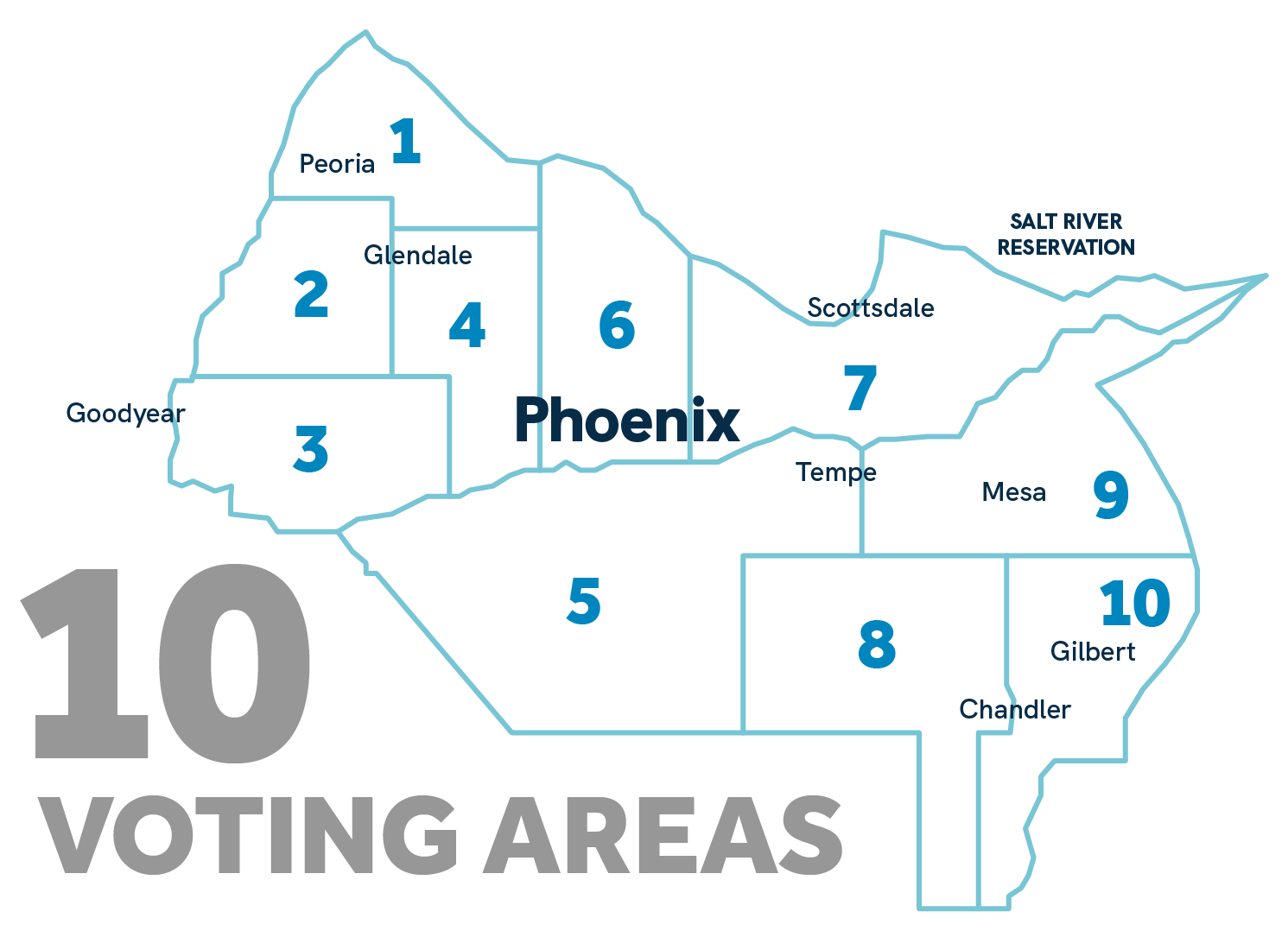
The Association and District both lie within the overall boundary of the Salt River Reservoir District, which is divided into 10 geographical voting areas.
Elected officials
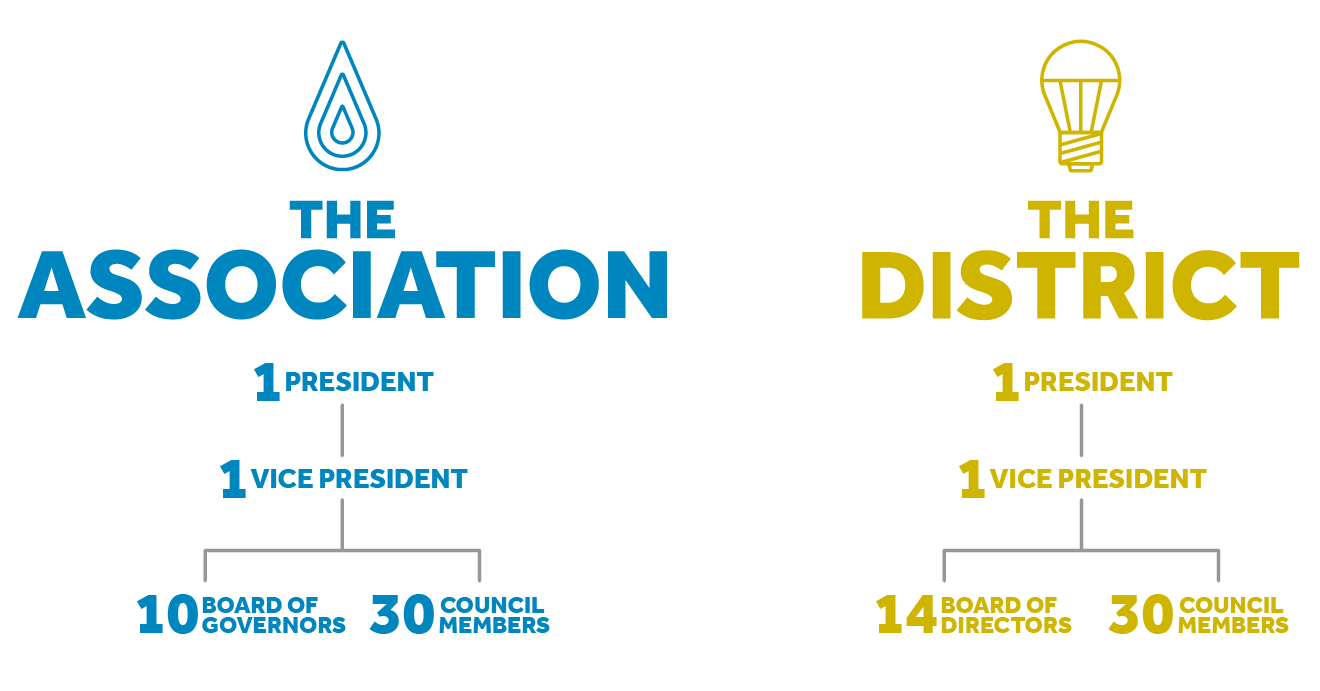
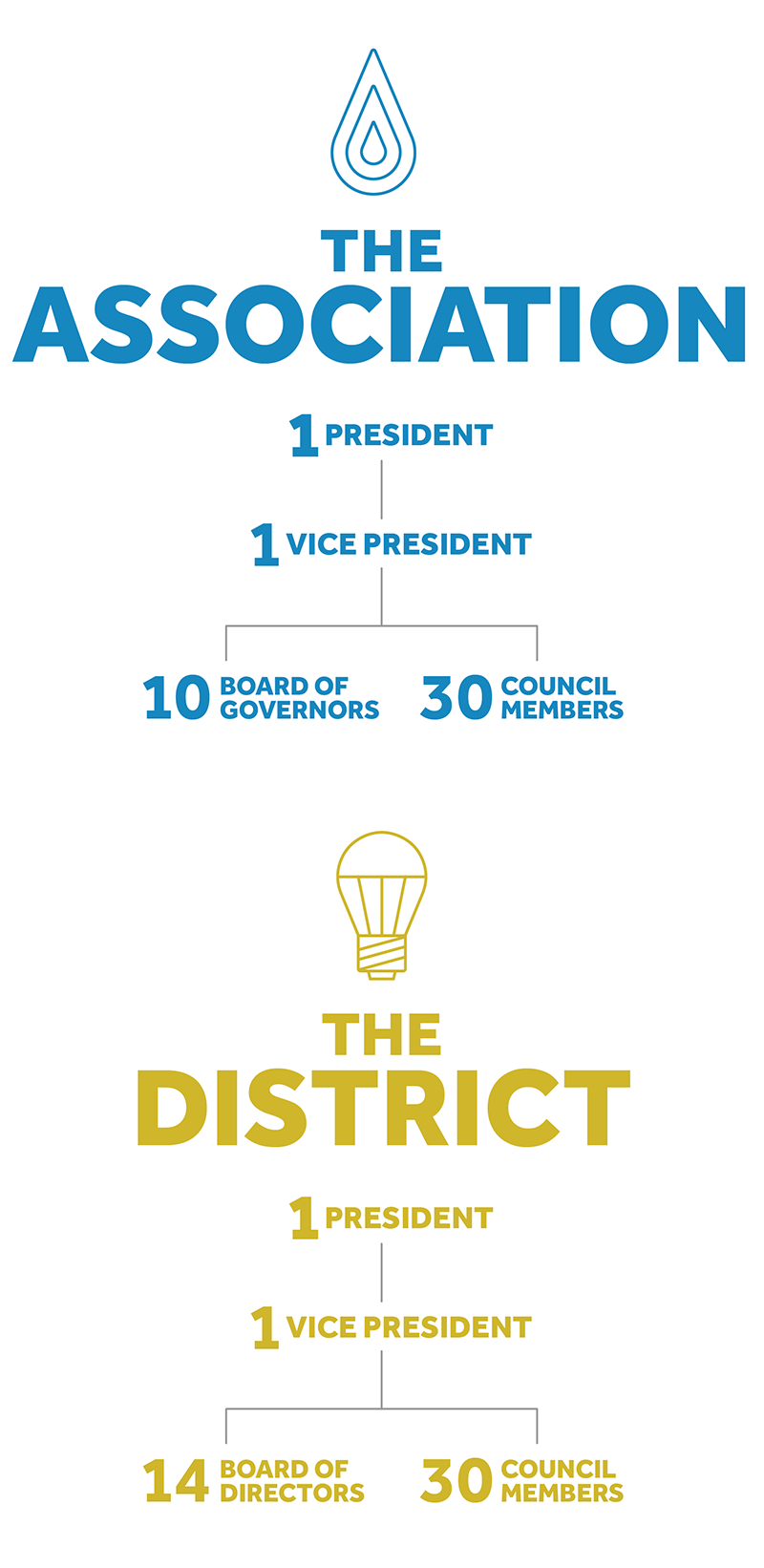
SRP is made up of publicly elected officials from both the Association and District, each playing a critical role in making key decisions about delivering water and power to Central Arizona.
Below is an image illustrating the Board and Council structure of both the Association and the District.
Acreage-based voting system
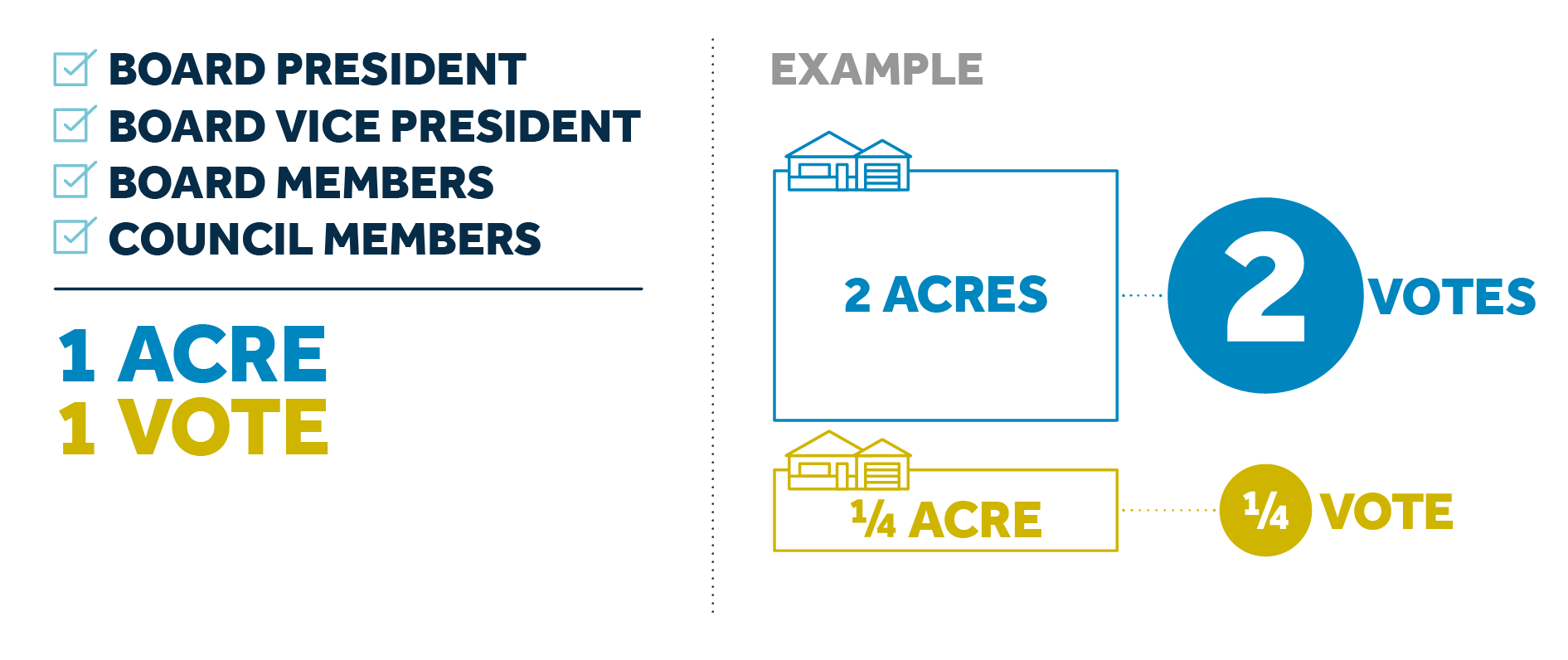
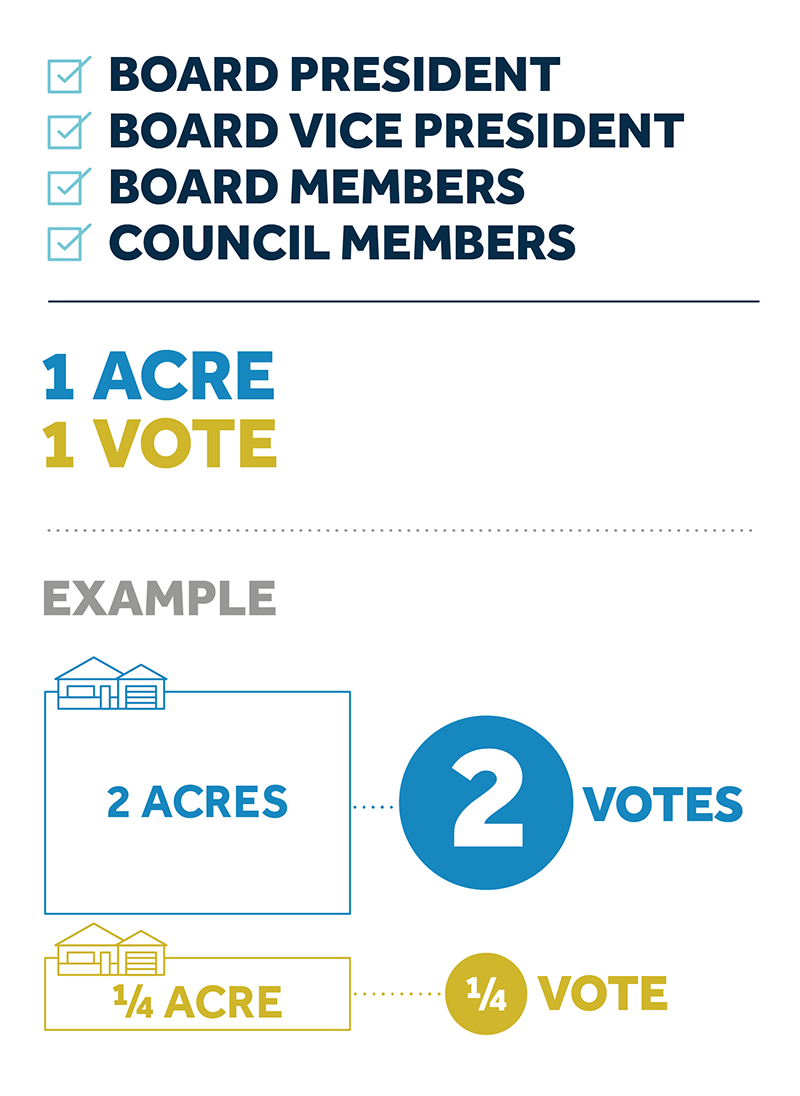
SRP operates under a voting system based on land ownership. The Board President, Board Vice President, Council members and 10 of the 14 District Board members are chosen through an acreage-based system: one acre, one vote.
For example, a landowner with 2 acres casts two votes, while someone with 0.25 acres casts a quarter of a vote.
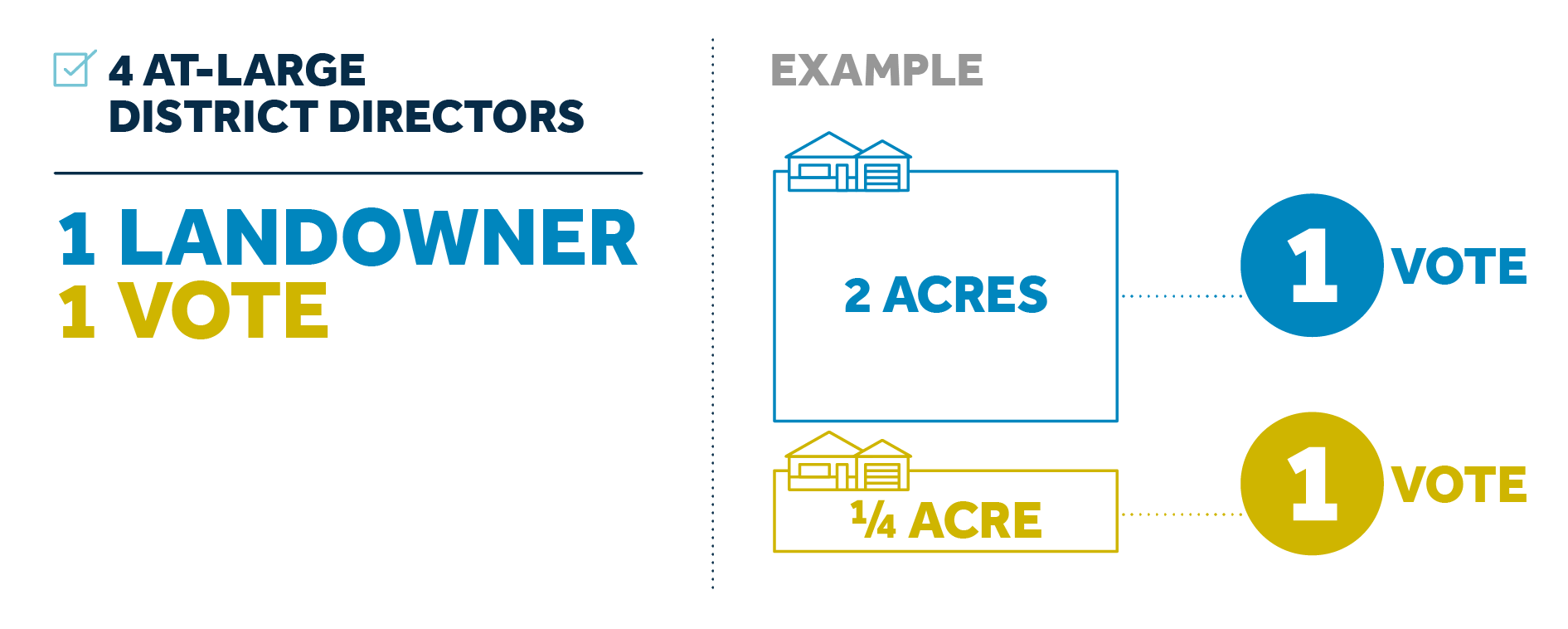
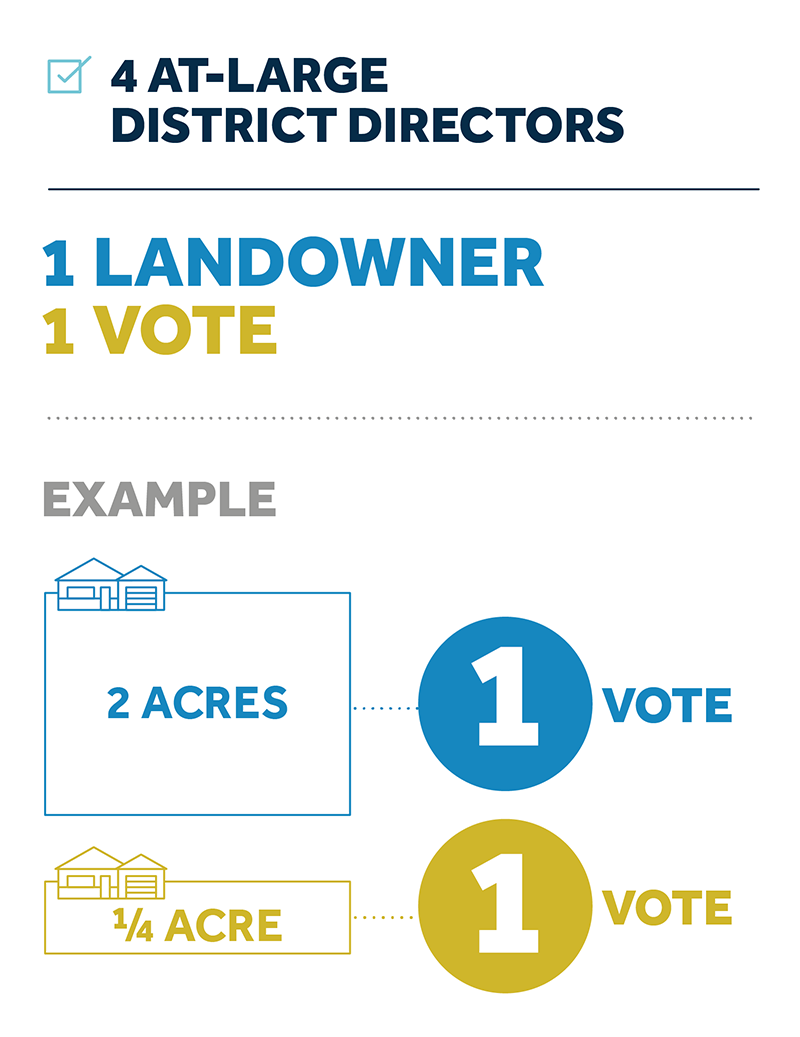
The remaining four at-large District directors are elected using a one landowner, one vote system, regardless of acreage.
 |
Have questions about the SRP elections? For questions, call the Elections Information Line at (602) 236-3048(602) 236-3048, Monday–Friday from 8:30 a.m.–5 p.m. or email [email protected]. |