








See how SRP energy rates compare
Arizona
SRP offers some of the most competitive energy rates in the state, averaging about 18%* lower compared to other Arizona utilities.
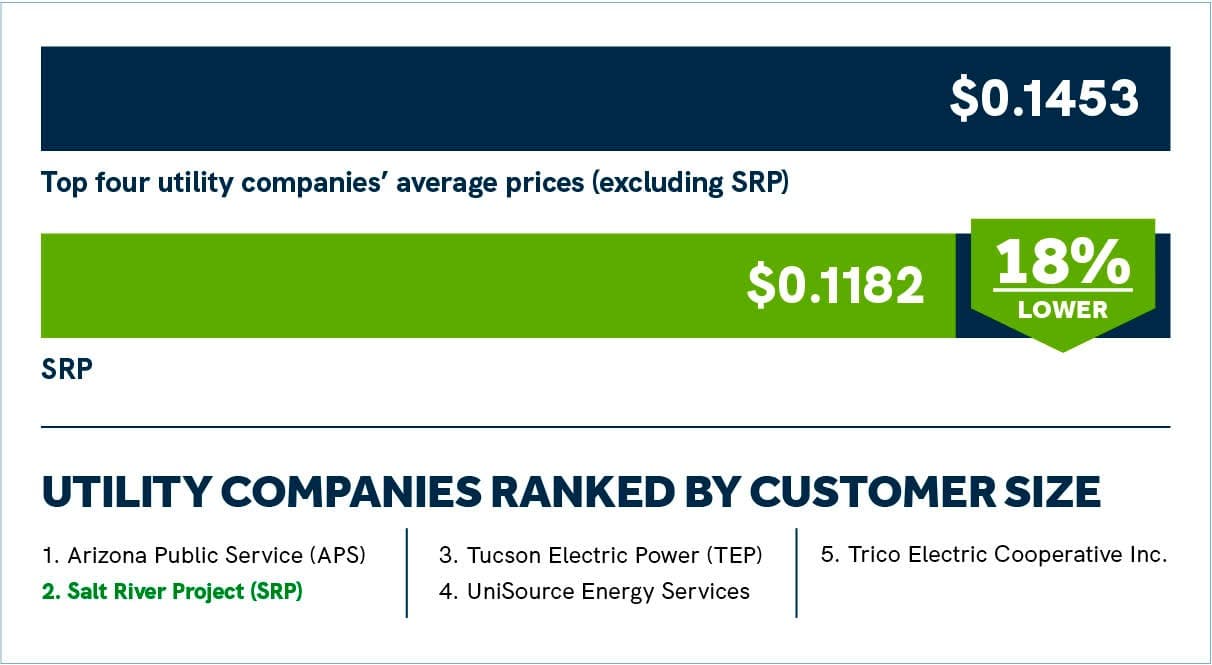
*Reflects an average price per kWh across SRP’s price plans vs. the combined average price per kWh of the top five Arizona utilities by customer count from November 2024 to October 2025.
Southwest region
SRP is among the lowest-cost utility providers in the Southwest. On average, our rates are about 37%* lower than those of other large utilities across seven Southwest states. The chart below illustrates how SRP compares with utilities in Arizona and other Southwest states.

*Reflects an average price per kWh across SRP’s price plans vs. the combined average price per kWh of 10 peer electric utilities in the Southwest with over 500,000 customers from November 2024 to October 2025.
Source: eia.gov data (Opens in a new tab)
Community-based not-for-profit
As a community-based not-for-profit organization, SRP does not have investors or shareholders, so it does not pay out dividends. Instead, SRP reinvests any surplus revenue into our operations, thus reducing the need to increase rates. From improving infrastructure to enhancing customer programs, our focus is on people and community, not profits.
How SRP determines pricing
SRP is a political subdivision of the State of Arizona and has a publicly elected Board of Directors. Under Arizona law, the SRP Board has the authority to establish electric rates after a public process that includes input from our customers. SRP electric prices are not determined by the Arizona Corporation Commission.
When reviewing and deciding upon proposed price plan changes, the SRP Board first provides notice to customers and other interested parties, offers them the opportunity to provide comments, and then has a series of public meetings where our customers can participate in person.
FAQ
The list of the top five Arizona utility companies is defined by those with the largest customer count. All data is pulled annually based on a 12-month cycle from November to October using publicly available data from eia.gov (Opens in a new tab).
The definition of the Southwest region is pulled from SRP's current delineation for reliability (System Average Interruption Duration Index, or SAIDI) benchmarking electric utilities with greater than 500,000 customers in states bordering Arizona.
- Arizona
- California
- Colorado
- Nevada
- New Mexico
- Utah
Comparison data for the Southwest region's large utilities is pulled annually based on a 12-month cycle from November to October using publicly available data from eia.gov (Opens in a new tab).
The main factors that can affect SRP's price per kilowatt-hour (kWh) are base rate (standard electric rates), Fuel and Purchased Power Adjustment Mechanism (FPPAM), Transmission Cost Adjustment (TCA) and price plan.
- Base rate: Every few years, SRP management conducts a comprehensive review of its costs and revenue needs. This includes:
- Infrastructure maintenance and upgrades
- Investments in new energy sources
- Meeting environmental and regulatory requirements
- Fuel and Purchased Power Adjustment Mechanism (FPPAM): This adjustment accounts for market fluctuations in fuel costs, such as natural gas, and purchased power, such as third-party power plants. FFPAM allows SRP to recover actual costs without markup, as we strive to limit costs carried over to our customers. The FPPAM is reviewed and adjusted on a regular basis by the SRP Board of Directors.
- Transmission Cost Adjustment (TCA): This allows for the recovery of transmission-related costs incurred by SRP to bring power from third parties into the SRP service territory. The TCA helps to reduce the risk of over- and under-recovery due to changes in transmission cost or load. The TCA is reviewed and adjusted annually by SRP's Board of Directors.
- SRP's standard electric rates offer a variety of price plans for customers to select the best fit for their usage and lifestyle. Plans range from the Basic Price Plan, which has a flat rate per kWh (regardless of the time of day you use power) to time-of-use plans with rates that vary by time-of-day. Time-of-use plans also offer super off-peak, off-peak and on-peak rates.
- Base rate: Every few years, SRP management conducts a comprehensive review of its costs and revenue needs. This includes:


