







Electric vehicle (EV) chargers and equipment
Supporting your charging choices
Switching to an electric vehicle (EV) is exciting but understanding how to charge it can feel overwhelming. We’ll walk you through the basics of how charging works, explain the different options and help you choose the method that fits your lifestyle.
Types of EV chargers
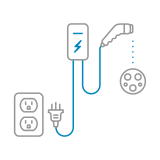
Level 1 (L1)
Slow but simple and the least expensive option. Level 1 chargers are great for users with shorter commutes or who can plug in for longer periods of time (day or night). Uses a standard 120-volt home outlet.
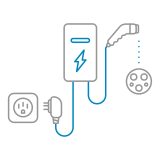
Level 2 (L2)
Good balance of speed and cost for most EV owners. Level 2 chargers range from 16 to 80 amps and offer different charging speeds, adding anywhere from 15 to 80 miles of range in an hour. Require a 240V outlet (similar to a dryer outlet).
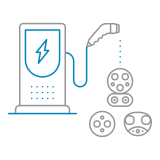
DC Fast (DCFC)
Ultra-fast, but more expensive. DC fast chargers are generally best used for longer road trips and charging on the go, adding 120-700+ miles of range per hour of charging, depending on the charger power and vehicle. They are only publicly accessible and not currently available for in-home installation.
Chargers: Know the difference
Level 1 | Level 2 | DC Fast | |
Voltage | 120V AC | 240V AC | 480V DC |
Power range | 1.4 - 1.9 kW | 3.3 - 22 kW | 50 - 350+ kW |
Miles per hour | 3 - 5 | 15 - 80 | 120 - 700+ |
Home installation cost | $0* | $500-$2,000* | N/A (Public) |
Best use | Daily | Daily | Road Trips |
*depending on outlets available
EV plugs
There are many different types of EV plugs used around the world. Most automotive original equipment manufacturers (OEMs) are committed to the Tesla/NACS plug, which means that they will be offered on most EVs in the coming years.
In the meantime, many OEMs provide adapters so that EV owners can use any type of charging plug. It’s strongly recommended that you only use OEM-certified adapters.
| Plug types: | |
| L2 plugs | J1772 and Tesla/NACS |
| DCFC plugs | CCS, Tesla/NACS and CHAdeMO |
Networked vs. non-networked chargers
Choosing the right charger impacts convenience, cost and your ability to take advantage of energy programs. One of the options to choose is a networked (or smart charger) vs a non-networked charger.
Here’s how the two compare:

Networked/Smart charger
Easily schedule and adjust charging times for cost savings.
Includes added expense for connectivity and smart features.
Join charging programs, like SRP EV Smart Charge™ for incentives and grid support.
Manage charging and view real-time data via apps or dashboards.
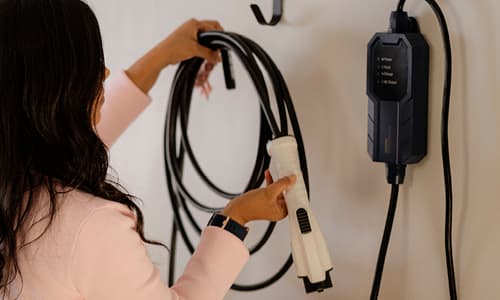
Non-networked charger
Simple, budget-friendly option without connectivity features.
Provides standard charging without remote control or optimization.
Limited ability to participate in charge optimization programs, like SRP EV Smart charge.
Reduced capabilities to schedule charging.
Hardwired vs. portable chargers
Another detail to consider when choosing the right charger for you is hardwired vs portable. Both options can deliver Level 2 (240V) charging. The main difference between the two is how they connect to your home’s electrical system, which can affect installation, eligibility and usability.
Here’s how the two compare:

Hardwired charger
Requires a licensed electrician, a dedicated circuit, and often a permit/inspection; recommended for clean, permanent installs and outdoor locations.
Reduces wear on outlets and can support higher amp configurations for faster charging.
Can have a higher upfront cost due to professional installation and hardware.
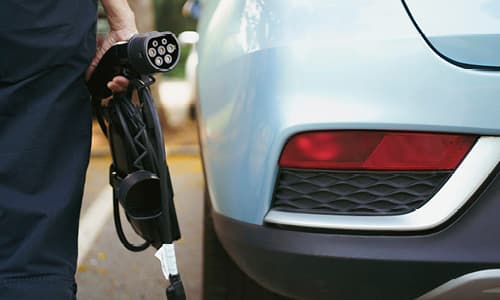
Portable charge
Plugs into a compatible 240V receptacle; it may only require installing a proper outlet if one isn’t already available.
Easy to relocate or remove — a good option for renters or those planning a move.
Receptacle ratings can cap charging speed.
SRP offers exclusive rebates to help you find the right charger for you. SRP customers can save $250 on a Level 2 smart charger by shopping SRP Marketplace™.
The most affordable time to charge
One of the most commonly known benefits of driving an EV is that it’s more cost effective to “fuel up” on electricity than gasoline. SRP customers can save even more by charging at home during off-peak or super off-peak hours and limiting charging during on-peak hours. Visit our Ways to Save page for more details!
Charging around town
The number of public chargers coming into SRP’s service territory each year is greatly rising. EV owners can drive with confidence knowing there will be a charger on the go (Opens in a new tab) when needed.


