








Understanding electric vehicles (EVs)
What is an EV?
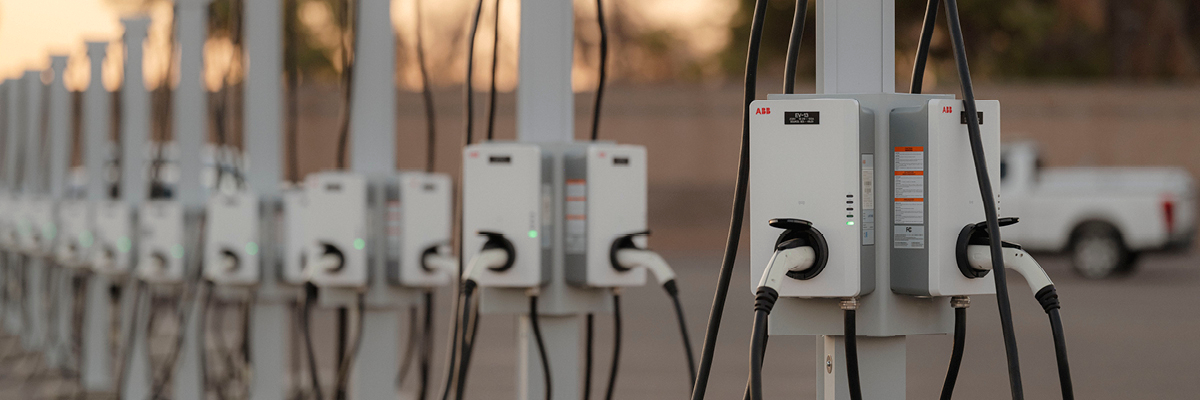
An EV is a vehicle with a charging port that is powered either exclusively or in part by electricity from a battery. EVs can be charged at home, at work, or at public charging stations and they offer a quieter, more efficient driving experience.
There are two main types of EVs with charging ports:
Battery Electric Vehicles (BEVs)
Plug-In Hybrid Electric Vehicles (PHEVs)
What is a hybrid electric vehicle (HEV)?
A HEV combines an internal combustion engine with an electric motor and a very small battery. This battery is charged through regenerative breaking and the engine rather than from an external plug.
EV vs HEV: Know the difference
All vehicles have qualities that fit better with different lifestyles. While there is no perfect vehicle, there is one that’s best for you:
EV | Hybrid EV | |
Power source | Battery (electricity) | Gas + small battery |
Tailpipe emissions | None | Reduced compared to traditional gas vehicles |
Fuel | Electricity via plug-in charging | Gasoline |
Maintenance | Fewer moving parts means lower maintenance | Lower than traditional gas vehicles due to regenerative braking |
Driving range | Varies with an average of more than 300 miles on newer models. | Generally 400–600 miles. |
Fuel economy | Average MPGe of ~100 | Average MPG of ~50 |
Benefits of driving electric
Drivers looking to save money, improve their driving experience and support cleaner transportation continuously turn to EV ownership.
EV key benefits:
- Charging is often cheaper than fueling up with gasoline— SRP offers that feature super off-peak hours, which offer the most affordable electricity for charging.
- EVs have fewer moving parts than traditional gas vehicles, resulting in lower maintenance costs.
- Provide a smoother, quieter performance with instant acceleration.
EV energy grid benefits:
- When SRP customers charge their EV during super-off-peak and off-peak hours, they help reduce strain on the power grid.
- EVs can help balance renewable energy (such as solar) by charging when renewable production is high, making it the least expensive time to charge.
- As more renewable energy and clean energy are added to the grid, SRP customers who own an EV will continue to get cleaner “fuel” over the years.


