






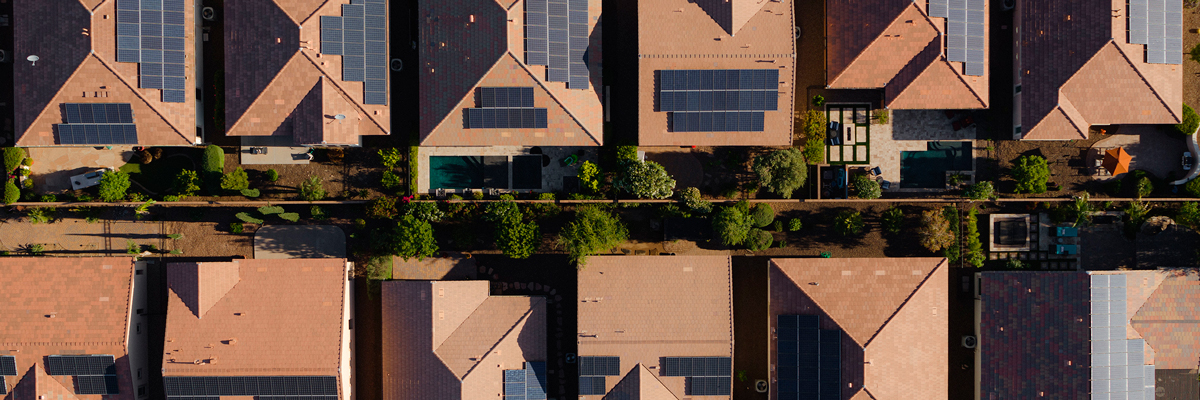
Rooftop solar for homeowners
Is rooftop solar right for you?
Rooftop solar has many great benefits, but you’ll want to ensure it meets your needs and makes sense for your home. Explore the steps below to see if rooftop solar might be right for you.
 | Step 1: Review your bill |
 | Step 2: Evaluate your property |
 | Step 3: See if you qualify for tax credits |
 | Step 4: Get an estimate |
Key considerations
Solar power can be a complicated and confusing subject, but it doesn’t have to be. Explore the topics below to learn about the most important things to know before signing a contract.
Rooftop solar 101
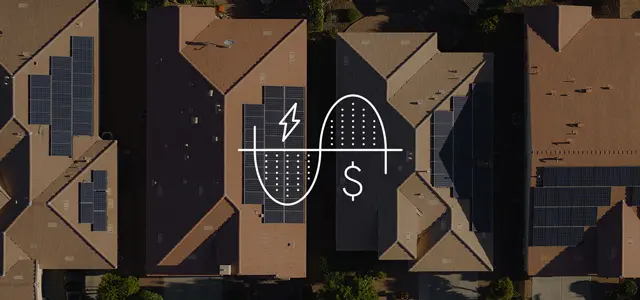
Energy and demand
Demand is the amount of power your home uses at any given point in time. SRP's demand charges are based on 30 or 60-minute intervals during on-peak hours.
Solar price plans
Smart solar shopping tips
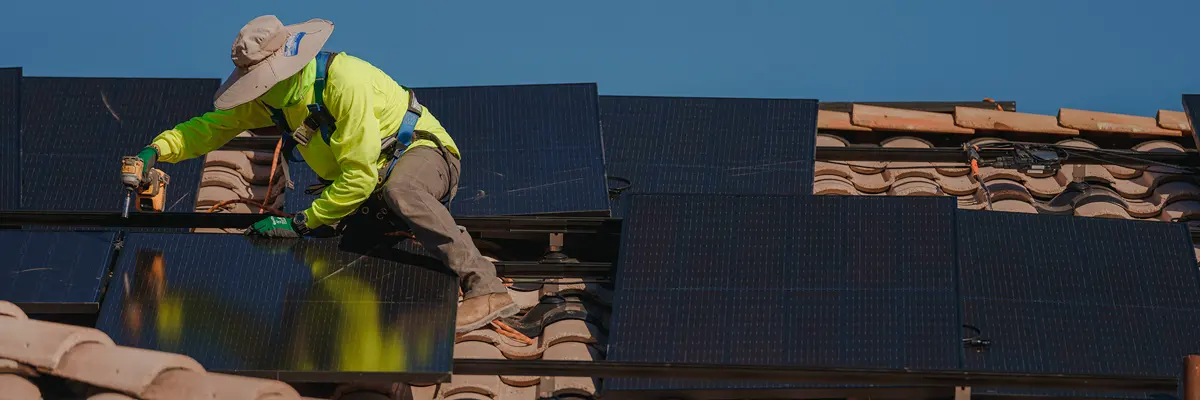
Preferred Solar Installer Program
Working with a qualified solar contractor is extremely important. We can put you in touch with trusted local providers who are part of our Preferred Solar Installer program. SRP Preferred Solar Installers are licensed, bonded, insured and trained to work with our solar plans. They can design your system, offer financing options, provide a safe connection to the grid and train you on how to operate and troubleshoot your new solar panels.
What qualifications do SRP Preferred Solar Installers have?
All SRP Preferred Solar Installers:
- Hold an active solar license granted by the Arizona Registrar of Contractors. (Opens in a new tab)
- Have been in business for at least 24 months under the same business license, same leadership and same corporate name.
- Maintain a Better Business Bureau (BBB) (Opens in a new tab) rating of "A" or higher with no outstanding complaints with the BBB.
- Have been trained on SRP's solar price plans.
Incentives and rebates
Based on the production of your solar or storage system, you might qualify for rebates and incentives from SRP to help you save money while harnessing the power of renewable energy.
SRP Renewable Energy Credit Purchase Program
SRP Battery Partner™ program
Investing in renewable solar energy
While rooftop solar benefits individual homes and businesses, SRP is committed to investing in solar energy on a large scale. Utility-scale solar energy is produced in a commercial facility, like a solar farm, and it can be shared with customers across the Valley – even those who don’t have solar panels. Learn more.
Frequently asked questions
Yes. On the Customer Generation and Average Demand price plans, if the energy produced by your solar system is greater than the energy you used during the billing cycle, then the excess energy will be credited to your bill. You'll get back the same value you would have paid for that energy had you purchased it from SRP. On the TOU Export, EV Export, Conserve and Save and Manage Demand and Save price plans, if the energy produced by your solar system is fed back to the grid at any time, SRP will credit you at a fixed export rate of $0.0187 per kWh and subtract it from your bill.
On the TOU Export, EV Export, Conserve and Save, and Manage Demand and Save price plans, excess solar generation cannot be carried over. On the Customer Generation and Average Demand price plans, excess generation can be "banked" during the billing month. Any unused excess energy will be credited at the end of the billing cycle at the retail rate.
Solar and nonsolar customers pay the same monthly service charge. Your monthly service charge (MSC), which helps SRP cover fixed costs to support grid capacity, is based on which MSC tier you are in.
MSC Tiers
- Tier 1: If you're in a multifamily home (apartment, condominium, townhome), your MSC will be $20.
- Tier 2: If you're in a typical single-family home, your MSC will be $30.
- Tier 3: If you're in a home with a large electric service entrance, your MSC will be $40. About 3% of SRP residential customers fall into this category.
If you're on a demand price plan, you'll also pay a demand charge.
Yes, through the SRP Solar Choice™ program, customers who don't have solar panels can offset their energy use with power from Arizona solar farms. This plan costs just half a cent more per kWh on top of your current price plan.
You can earn money by offsetting your electric bill, using only the energy generated from your system or generating excess energy that will be credited to your bill at a fixed rate of 1.87 cents per kWh on Export price plans and the retail rate per kWh for Demand price plans.
SRP does not sell or install solar or Distributed Energy Resource (DER) system components, but we do have a list of trusted local providers through our Preferred Solar Installer program. If a company claims to partner with SRP, call (602) 236-8888(602) 236-8888 to make sure they're on our approved list. We're available from 7 a.m. to 6 p.m. seven days a week. You can also email us at [email protected]. We also suggest checking out our smart solar shopping tips page to make sure you're aware of common misinformation and red flags when shopping for solar.
Visit Energy Savings Hub | Department of Energy (Opens in a new tab) for tax credit availability and other energy savings programs. To see if you qualify for these credits, consult a tax professional.
- Once we receive the Program Application, we review it for completion and notify the installer of any issues in a timely manner.
- We then prepare a Distribution Interconnection Agreement (IA) and send it to the property owner for their electronic signature.
- Then we create an order on the customer's account to track the design review phase of the process. Once this order is created, the project will be assigned to an SRP design consultant.
- If the service entrance section (SES) will be upgraded, the installer must contact SRP Construction at (602) 236-0777(602) 236-0777 to schedule the appointment before the solar design will be reviewed.
- Upon receiving approval to proceed from our design consultant and obtaining all applicable building permits, the Installer may proceed with installing the Distributed Energy Resource (DER) Facility.
- Upon completing installation of the DER Facility, the Installer must contact the appropriate authority having jurisdiction (AHJ) to inspect the facility. The AHJ must submit a City Clearance (CC) to SRP indicating that the DER Facility has passed inspection.
- If the AHJ does not permit the work at the SES prior to DER installation, the Installer must provide a Certificate In-lieu of Electrical Clearance (CILC) in advance before SRP inspection and re-energization.
- Once the DER Facility has received CC/CILC and SRP has received the IA signed by the Customer, the Installer can request to schedule the SRP inspection.
- Upon successful completion of the Final Inspection, SRP will install new SRP meters.
- If the facility fails inspection, an email will be sent to the Installer with a description of the reasons for the failure.
- The DER Facility must be energized within 24 hours of the passed inspection by the Installer or the Customer.
For more detailed information, check out our Residential Distributed Energy Resource Process Flow.


