






SRP’s renewable energy plans
Our energy mix
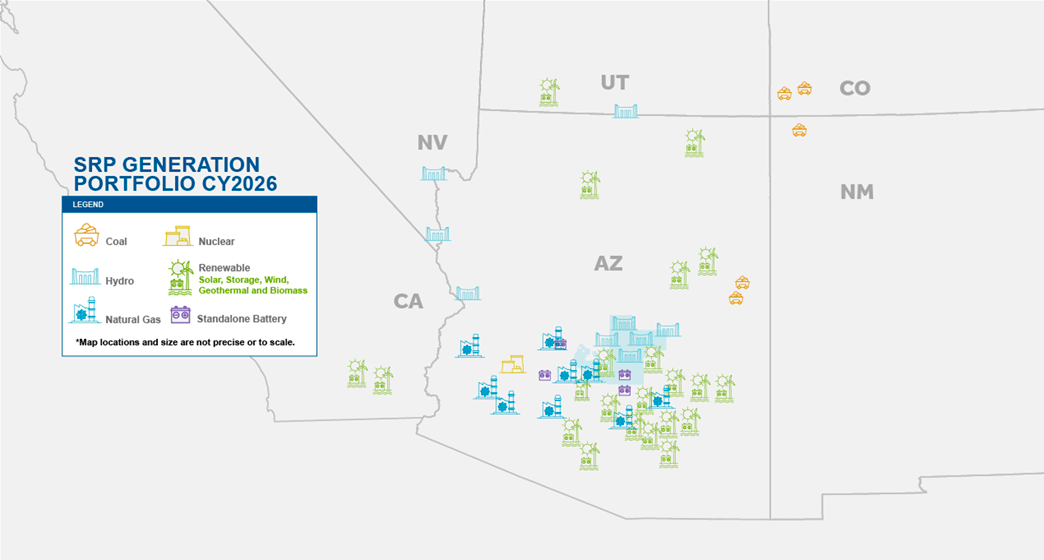
As part of our commitment to achieve net zero carbon by 2050, we are expanding our mix of clean, renewable energy sources.
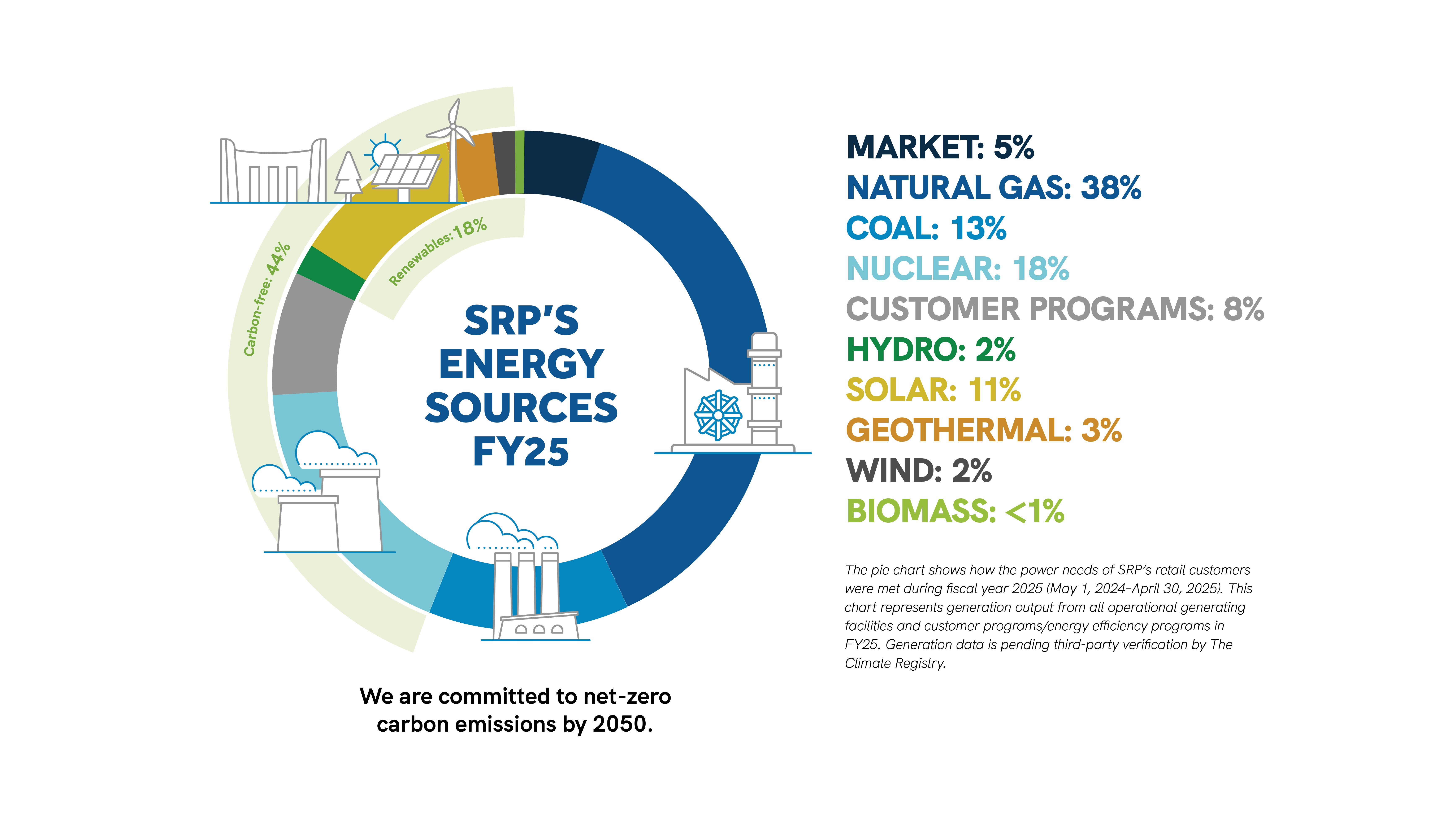
SRP is committed to cutting carbon emissions intensity by 82% by 2035 and reaching net zero by 2050. Learn more about sustainability at SRP.
What is renewable energy?
Renewable energy comes from natural sources, such as sunlight, wind or flowing water. Unlike traditional energy sources, like coal and gas, energy from renewable sources is almost limitless. Best of all, these energy sources emit far less greenhouse gases (the harmful gases that contribute to global warming).
Two of SRP’s largest renewable resources – solar and wind power – are variable, meaning they fluctuate. When the sun doesn’t shine or the wind doesn’t blow, SRP must rely on traditional energy sources and batteries to meet demand.
This blend of renewable and traditional energy sources ensures SRP delivers on our mission to provide reliable, affordable and sustainable power for the communities we serve.
Solar, Geothermal, Hydro, Wind, Biomass
Coal, Gas, Nuclear
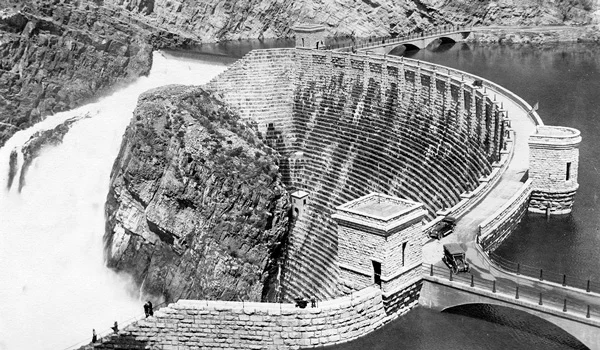
Hydropower
Hydropower uses flowing water to generate electricity. Water flows through a turbine causing it to spin, which creates energy. Next, a generator converts the energy into electricity. Then, the energy is transferred to the grid where it can be delivered to homes and businesses throughout the Valley.
SRP first brought hydropower to the Valley in the early 1900s following the construction of Theodore Roosevelt Dam. We now operate several dams that produce hydropower.
Geothermal
Geothermal power is generated from superheated water reservoirs deep underground. Steam turns a turbine that generates electricity. The process involves no fuel and produces almost zero carbon emissions, and the steam and water used to generate energy can be returned below ground.
SRP receives a significant amount of geothermal energy from Hudson Ranch I in California’s Imperial Valley as part of a 30-year agreement with EnergySource (Opens in a new tab). That's enough energy to power 26,000 homes.
Solar
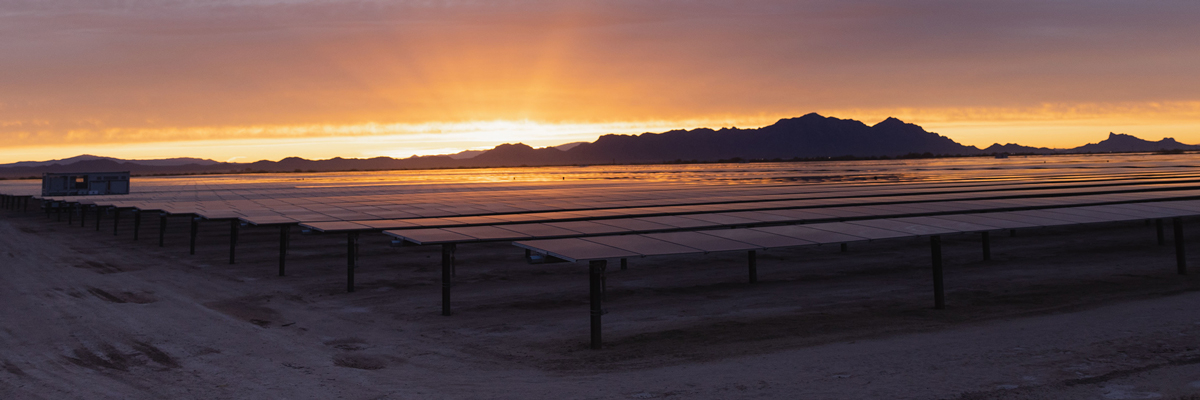
Solar panels turn Arizona’s sunny skies into electricity. SRP has over 1,500 megawatts (MW) of large-scale solar serving customers – with more in development.
SRP also has more than 1,100 MW of battery storage projects supporting the grid, helping ensure more solar-generated electricity is available during times of high demand. One of these projects is the Sonoran Energy Center (Opens in a new tab).
Wind
Much like hydropower, wind power is generated from spinning turbines. Wind blows propeller-like blades, rotating a turbine and spinning a generator to create electricity.
SRP was the first utility in Arizona to use wind power. Recently, we entered into a contract to purchase wind energy from the Babbitt Ranch Energy Center (Opens in a new tab) north of Flagstaff. Enough energy will be produced to power 40,000 homes.
Biomass
SRP works with facilities like the Snowflake White Mountain Biomass Power Plant to generate biomass energy. Heat is generated by burning combustion fuel (like paper and wood). The heat turns water into steam, which turns a turbine to make power. The plant gets wood from strategic forest thinning operations and paper fibers from a newsprint paper mill, waste that would otherwise end up in a landfill.
Renewable energy and Arizona
Utility-scale solar
Whereas rooftop solar benefits individual homes or businesses, utility-scale solar benefits all SRP customers. Utility-scale solar is produced in a commercial facility such as a solar farm. The energy enters the SRP power grid where it’s shared with customers across the Valley.
With utility-scale solar, even customers who can’t install their own solar panels can benefit from its affordable energy and feel good knowing that a portion of their energy comes from renewable resources. Join SRP Solar Choice™ and offset 50% or 100% of your energy with utility-scale solar.
Commercial customers and renewable energy
Custom Energy Portfolios
As part of our goal to achieve net zero carbon by 2050, we work with companies to help them meet their needs through renewable sources. We do this using power purchase agreements (PPAs) for specific large customers, programmatic subscription-type offerings and other structures that strive to meet each customer’s individual needs. If lowering your carbon footprint or offsetting your energy use with renewable sources is your goal, SRP can customize an energy portfolio for you. Our diversified renewable resource mix includes wind, geothermal, large and low-impact hydro, landfill gas and solar energy.


