








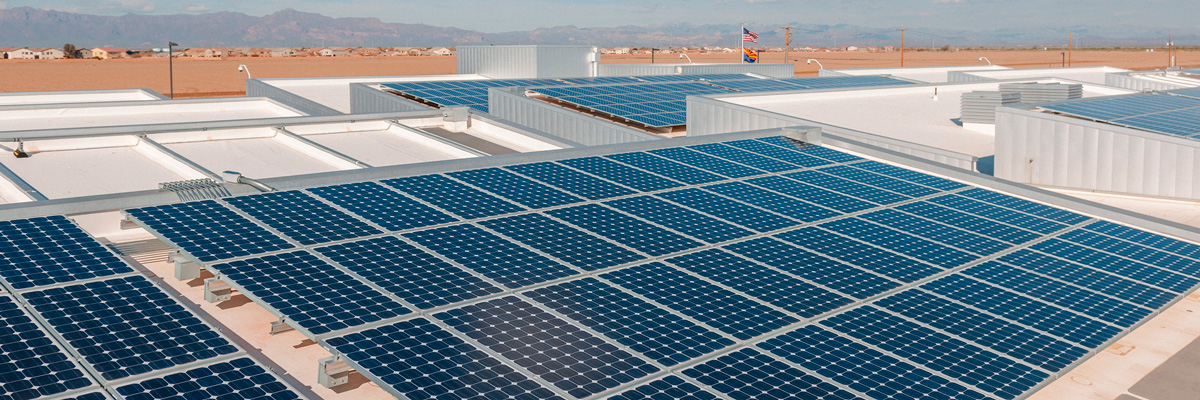
Installing solar panels at your business
Benefits of solar for your business
By installing a solar electric system, you can power your business using clean, renewable energy, reducing your carbon footprint and doing your part to help protect the environment in the process.
Depending on which design you choose, you may be able to achieve kilowatt-hour (kWh) cost savings and reduce your peak demand. Costs and benefits will vary depending on your unique energy needs and system attributes.
How a solar electric system works with the grid
As long as your business remains connected to the energy grid, your business will still be billed for energy from SRP – just as it did before you installed a solar energy system.
This is because your business will pull energy from the grid at times when there is no sunlight or when your solar electric system does not generate enough energy to meet your energy usage.
An interconnection agreement will detail the terms and conditions governing self-generation and interconnection to the SRP electric system. This is required for all customers who connect their solar electric system, or any system that serves all or part of the customer's retail load with electric energy, to SRP's electrical distribution system.
Finding energy solutions for your business
SRP’s team of experts is here to work with you to develop a strategic, personalized action plan that meets your energy goals. Contact your SRP Strategic Energy Manager or the Business Customer Center at (602) 236-8833(602) 236-8833 weekdays, 7 a.m. to 5 p.m., for a complimentary energy consultation.
Ready to purchase solar? Start the process here.
Download and review resources for a range of commercial solar projects, including inverter or non-inverter-based projects.
Process checklist - Learn how to apply for and obtain a solar interconnection.
Interconnection requirements - See eligibility, installation, equipment and leasing requirements.
Sample Distribution Interconnection Agreement (less than 1 MW) - This agreement is for inverter-based generators less than 1 megawatt (MW) and must be completed before interconnecting to the energy grid.
Sample Distribution Interconnection Agreement (1 MW and greater)- This agreement is for inverter-based generators 1 MW and greater and must be completed before interconnecting to the energy grid.
Interconnection costs and timeline for inverter-based projects
The timing and steps involved in interconnection will vary based on your project and construction timelines. Here’s the general process for completing an inverter-based project after you apply online (Opens in a new tab).
| Project phase | Total AC kW size at site | Timeline | SRP fees |
|---|---|---|---|
| SRP application review | All sizes | 5 business days | No fee |
| SRP design review | All sizes | 5 business days | No fee |
| SRP technical review (inverter-based projects) | 1–300 kW AC | Included in design review | No fee |
| 301–999 kW AC | 15 business day engineering review | No fee | |
| 1 MW+ AC | 60 business days | $15,000 deposit* | |
| Customer construction and city clearance | All sizes | No SRP fee. Your costs and timeline will vary based on your project scope, installation, city requirements, etc. | |
| SRP's final review after receiving city clearance | All sizes | 5 business days | No fee |
| SRP commissioning | All sizes | 5 business days | No fee |
*Actual study costs will apply; any remaining balance will be refunded or collected appropriately. Additional study requirements, costs or service riders may apply to non-inverter projects or generating facilities greater than 300 kW.
Get started by choosing a licensed solar electric installer
Need help? Contact your Strategic Energy Manager or the Business Customer Center at (602) 236-8833(602) 236-8833.
Contractors must apply and receive approval from SRP prior to system installation.
Interconnection costs and timeline for non-inverter-based projects
Here’s the general process for completing a non-inverter-based project.
| Project phase | Total alternating current kilowatt size at site | Timeline | SRP fees |
|---|---|---|---|
| SRP technical review of application package | All sizes | 80 business days | $15,000 minimum deposit* |
| Customer construction | All sizes | Costs and timeline will vary based on project scope, installation, city requirements, etc. | |
| SRP application review | All sizes | 5 business days | No fee |
| SRP commissioning | All sizes | 5 business days | No fee |
*Actual study costs will apply; any remaining balance will be refunded or collected appropriately. Other requirements and costs may apply to non-inverter projects and for generating facilities greater than 1 MW in size.
Billing, payment and price plans
At SRP you may either stay on your current rate or choose another in your size category. Find information on price plans for business, how your bill will be impacted, and what tax credits are available to you.
Available price plans for solar customers
SRP offers price plan options for commercial customers, either standard or time of use. Contact your account manager to determine which is best for you.
Energy production and how it affects your bill
Typically, solar electric systems produce 1,700 kWh per year, per kW rating of the system. For example, a 50 kW system can produce up to 85,000 kWh per year.
Your system’s output ultimately depends on the type of components installed and the system's orientation in relation to the sun. You may want to consider reducing total output for other benefits, such as power factor correction or offsetting peak power use.
Available tax credits
State and federal tax credits may be available. To learn more, explore these third-party websites:
Please note that SRP does not provide tax advice, nor do we endorse or guarantee tax information provided by a third party. We recommend that you contact a tax professional with any questions and to confirm your eligibility for any available tax credits.
How solar or distributed generation affects your power factor
You may see power factor decline after your equipment is connected to the grid. Learn more and find out what to do in our Power Factor Guide.
Tracking your energy and buying it back
SRP will monitor energy production from your solar electric system. Customers who sell excess energy back to SRP will fall under the SRP Buyback Service Rider, and customers with solar systems with a nameplate capacity of 100 kW AC or less may opt in to the SRP Renewable Export Program. Click here to learn more.
Under the Buyback Service Rider, if the energy produced by the system is greater than the energy used by the customer in a given period, the value of the excess energy produced is credited to the customer.
The amount credited to your account is determined by taking the hourly indexed energy price and subtracting SRP's costs related to scheduling, system control and dispatch services.
I’m still deciding whether to purchase solar. What should I consider?
For customers who haven’t yet decided to purchase a system, here’s what you should keep in mind:

How much electricity will be produced

How much space you'll need for installation
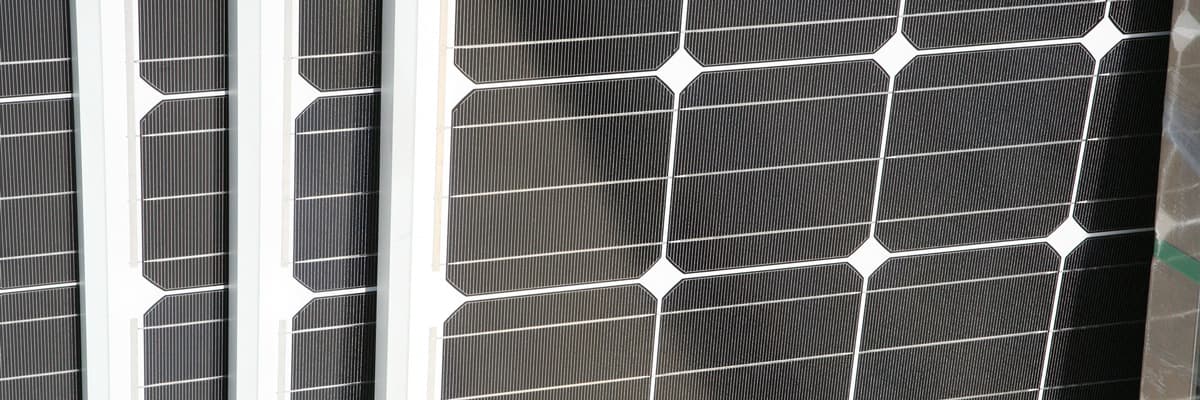
How long the system will last
Installing your solar electric system
A properly licensed contractor must install the solar electric system to ensure it complies with all applicable codes and SRP interconnection requirements.
SRP does not install solar electric systems nor do we promote or partner with individual contractors for business solar installations. The following solar interest groups provide lists of solar electric contractors:
Again, SRP does not endorse or guarantee any information provided by third parties.
Owning vs. leasing your system
To lease or to own your solar electric system? That is the question. Answering these questions can help you decide.
-
Does it make financial sense? Consider the cost of the system and the potential long-term cost savings. Looking at your most recent 12-month usage history and comparing it to the capacity of the system can help estimate your remaining electricity costs. You’ll also want to figure in other costs, such as maintenance.
-
How long will you stay at your current location? A solar lease can be a long-term agreement (20 years or more, in many cases). Make sure you understand what will happen if you relocate or terminate the lease early. What are your obligations if your business relocates, closes or changes ownership?
-
What are your operating and maintenance obligations? Usually, if you purchase a system, you're responsible for maintenance and the associated costs. Your lease agreement should spell out who is responsible for operating and maintaining the system. Look for answers to these questions:
-
If your system needs repair, who pays for it?
-
Who is responsible for insurance? If you are, how much will that cost?
-
If the system isn't working for a period of time, are you still responsible for the lease or other payments?
-
-
What happens when the lease term ends? It’s important to know who’s responsible for removing the system at the end of the lease term. If you choose to keep it, do you have to buy the equipment? If so, how much will it cost? If the system is removed, who’s responsible for repairing the roof?
More ways to be green
Rebates for energy-efficient upgrades
Your business could qualify for up to $300,000 in SRP rebates for upgrading to more energy-efficient equipment.
Small business rebates
Cut costs with SRP small business rebates for smart thermostats, LED lighting upgrades and more.
SRP electrification rebates
Get up to $50,000 in rebates for electric forklifts and commercial charging stations for EVs, refrigerated trucks and more.
RELATED TOPICS
Information for commercial solar installers | SRP
Find SRP interconnection information for commercial solar installation contracts and request a detailed step-by-step checklist.
Business rebates and savings tools | SRP
Here, you’ll find exclusive SRP rebates, savings programs and low-cost tips to help your business save money on energy expenses.
SRP Solar Choice, utility-scale solar for business | SRP
Sign your business up for SRP Solar Choice to offset half or all of your electric use with solar energy. Pay about half a cent more per kWh.


