


SRP history runs deep in Arizona
Since 1903, Salt River Project has helped shape our state. We take pride in our history of service to the people who call Arizona home.
On this page:
Created by and for the communities we serve
It all began with a group of local ranchers and farmers who shared a common goal – to ensure the Valley would flourish.
They formed the Salt River Valley Water Users’ Association in 1903. Together, they offered up their land as collateral for federal funds to build Roosevelt Dam.
Why would they put so much on the line? The founders understood that a regular flow of water – ending a vicious cycle of drought and flood – was the key to long-term growth and prosperity in the Valley.
Both Arizona and SRP grew together – Arizona into a state of several million residents and SRP into an organization that today supplies around 850,000 acre-feet of water every year and delivers power to more than 1 million customers.
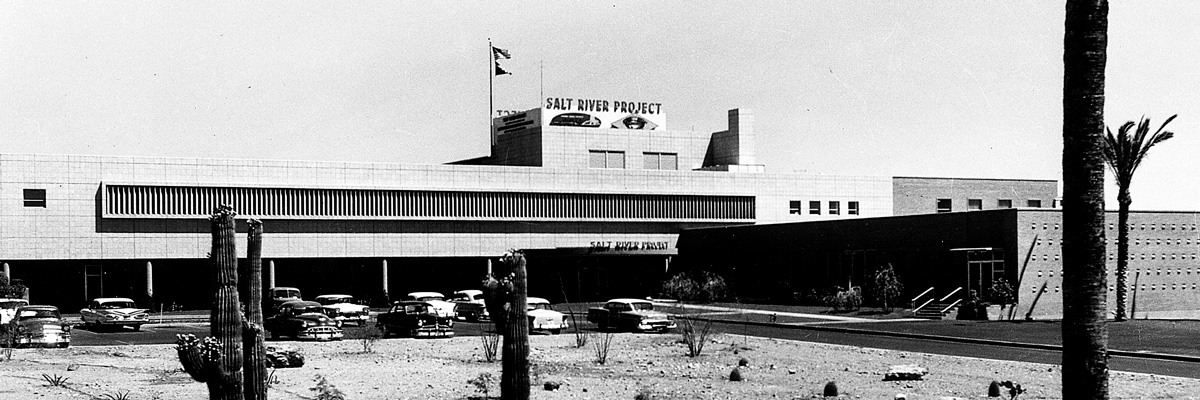
Experience the history of SRP in person
Care to step into Arizona's past and see what’s in store for the future? At the SRP Heritage Center, you can! SRP’s history museum features informational panels, artifacts, photos, interactive exhibits and virtual reality stations dedicated to our history and our plans for the future.
Highlights include:
- Artwork in SRP’s Canyon Gallery, just outside of the Heritage Center, that includes sculptures, ceramics and photography by Arizona artists.
- A changing gallery space that features exhibits and artwork focused on the history of SRP and Arizona.
- A virtual reality station where you can visit Roosevelt Dam or rappel from a helicopter onto a 500-kilovolt line.
1500 N. Mill Ave.
Tempe, AZ 85288
(602) 236-2208
Explore a map of SRP’s history
Discover historic water and power features that are part of SRP's system, along with nearby public art and historic sites. Click on a site to learn more. For the best experience, view the map in full-screen .
.
DID YOU KNOW?
Theodore Roosevelt Dam is a designated International Commission on Irrigation and Drainage World Heritage Irrigation Structure. Learn more.
Download more history right to your device
Ready to spend more time learning about SRP’s history? Download these resources to dig in.
The Story of SRP: Water, Power and Community
For a more detailed account of SRP’s founding and our historic role in the Salt River Valley, check out our e-book. In it, we explore the history shared between SRP and Greater Phoenix, beginning with the Valley’s prehistoric canal system.
Download e-book
RELATED TOPICS

History of canals in Arizona | SRP
SRP has a long-standing relationship with water in the Valley, but our chapters are only a piece of the story. Learn about the history of canals in Arizona.

History | SRPConnect Blog
SRP has helped shape the West since its founding in 1903 and our history is one of service to the residents of Arizona.
About Salt River Project | SRP
SRP is a community-based, not-for-profit organization providing affordable water and power to more than 2 million people in central Arizona. Read more here.