





Our history runs deep
We’ve helped serve and shape the Valley over the past century – through boom and bust, wartime and peace, droughts and floods.
Today, SRP ranks among the nation’s largest public power utilities and is one of the largest water suppliers in Arizona. Take a scroll through our history and learn about the careful planning, innovative thinking and community ties that are still paving the way for a brighter tomorrow.
Before 1450
Ancient desert dwellers constructed nearly 500 miles of canals in the Salt River Valley, a system that served up to 50,000 people at one time. These first canals laid the groundwork for the Valley’s modern canal system.
1860–1880
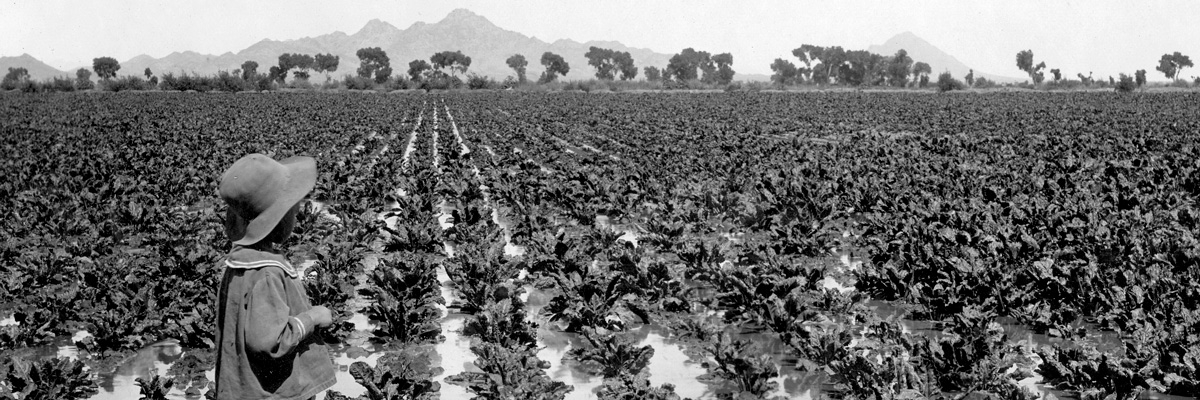
Mining in Arizona brought an influx of new people to the Salt River Valley beginning in the 1860s. The first canal built by these new arrivals was the Salt River Valley Canal, completed in 1868.
1890s
Drought threatened life in the Valley despite a growing network of irrigation canals, and settlers sought a more reliable water supply. The Tonto Basin was identified as an ideal location for a storage dam, but the financing to build it proved difficult to secure. Meanwhile, national support of federal financing for water reclamation projects was growing.
1902
The National Reclamation Act was signed into law by President Theodore Roosevelt. The Act allowed reclamation projects to receive government financing via loans and engineering expertise. Drought conditions continued to impact the Salt River Valley and those living here desperately needed a reliable water supply.
1903
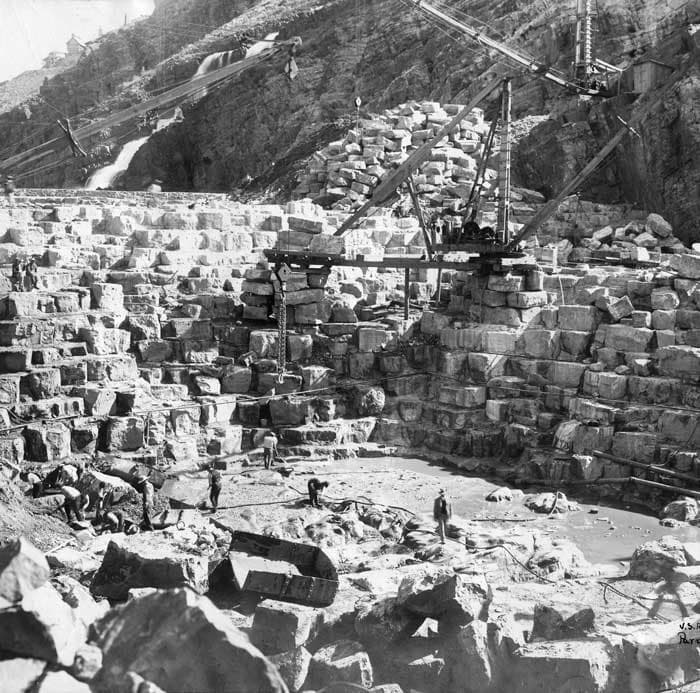
1906
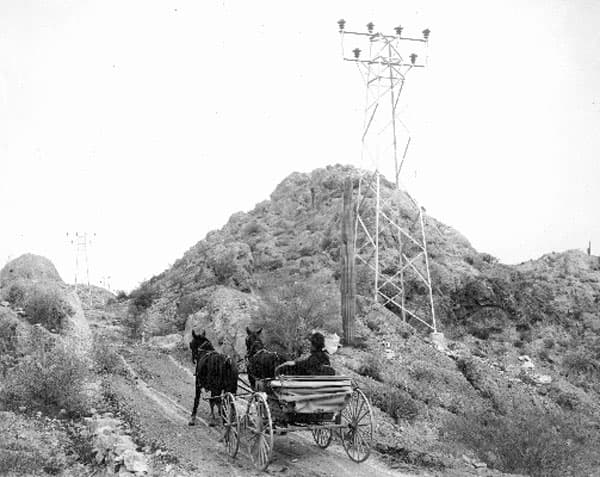
1909
More power was generated at Theodore Roosevelt Dam than was needed for construction purposes. This excess power was delivered to customers via the Mesa-Roosevelt transmission line and was used to run equipment such as irrigation pumps. The sale of this excess power established the concept of power as a “paying partner” for water in reclamation projects.
1910
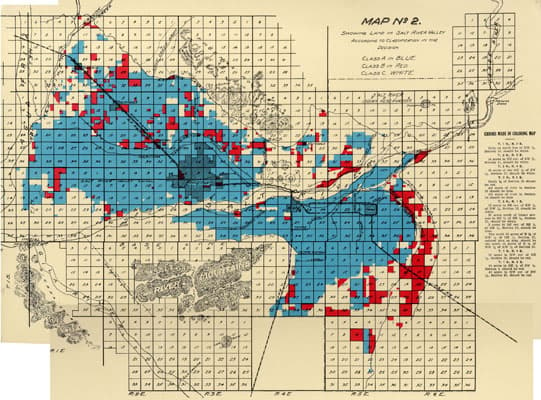
The friendly lawsuit Patrick T. Hurley v. Charles F. Abbott and Four Thousand Eight Hundred Others set out to establish priority dates for water usage in the Valley. Presiding judge Edward H. Kent issued his opinion on March 1, 1910. Known as the Kent Decree, it divided lands into three classes (A, B and C) with corresponding water delivery priority for some surface water from the Salt and Verde rivers.
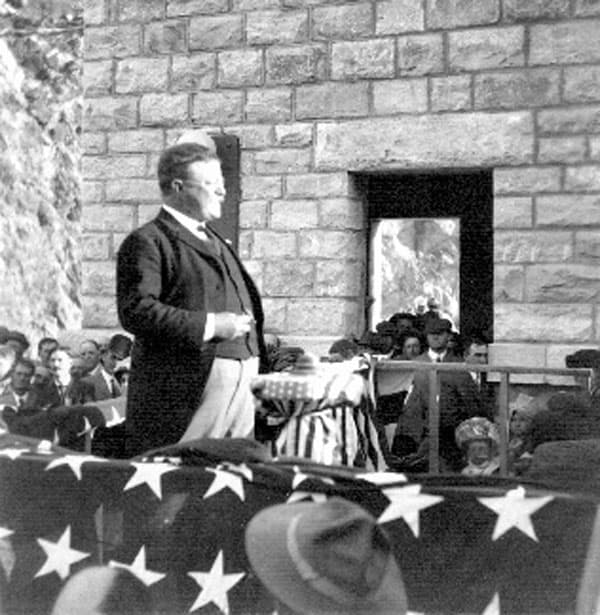
1911
Former President Theodore Roosevelt visited Arizona to dedicate his namesake dam on March 18, 1911. In his speech, Roosevelt named the National Reclamation Act and the construction of the Panama Canal as two of his greatest accomplishments while in office.
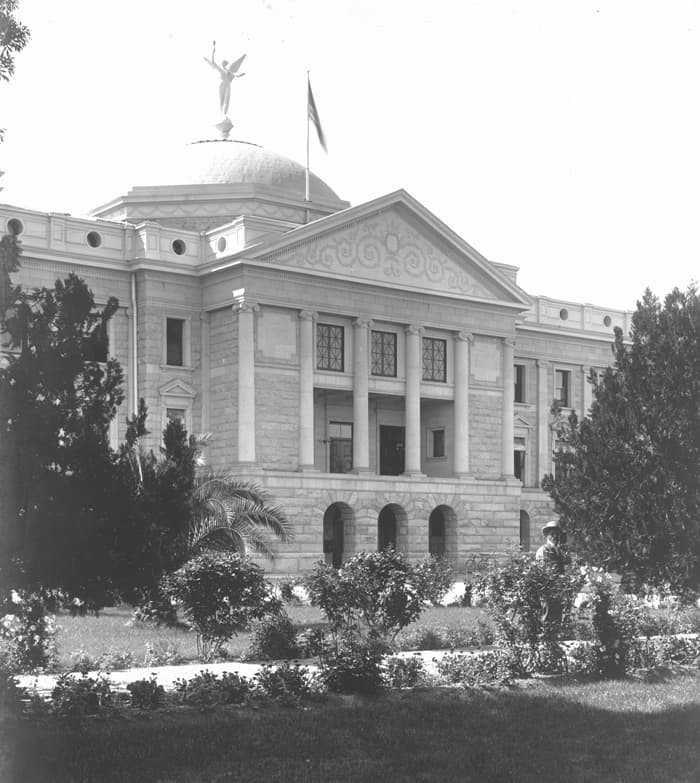
1912
One year after the completion of Theodore Roosevelt Dam, Arizona achieved statehood on Feb. 14, 1912. An image of a dam can be seen on Arizona’s official state seal.
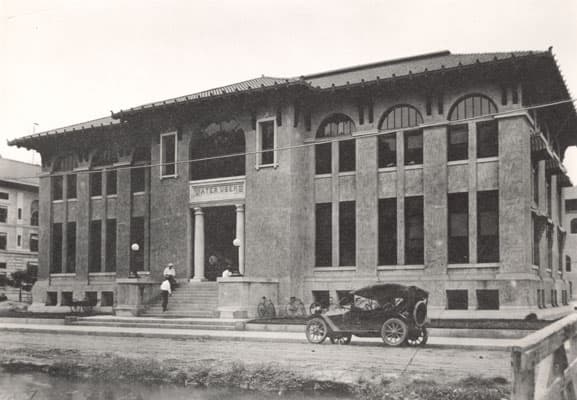
1917
The Salt River Valley Water Users’ Association (Association) signed a contract with the U.S. Reclamation Service, allowing the Association to take on the management and operation of the Salt River Project. Among the terms of the contract, the United States retained title to the dams, canals and hydropower plants. This contract continues to govern SRP’s relationship with the federal government.
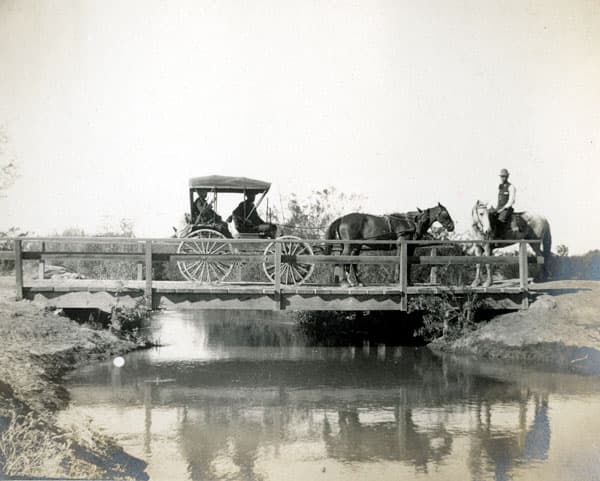
1922
SRP’s General Superintendent C.C. Cragin completed a plan to finance and build three additional hydroelectric dams along the Salt River. The plan not only increased water storage capacity on the river, but it also increased the hydroelectric generating capability of SRP. The dams included Mormon Flat Dam in 1925, Horse Mesa Dam in 1927 and Stewart Mountain Dam in 1930.
1928
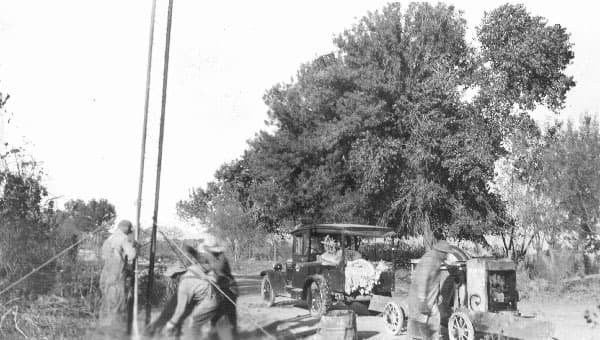
Demand for power in the Valley was growing, with approximately 1,000 shareholders requesting electric farm service. SRP began an effort to extend electric service to a growing customer base that included residential service. SRP’s work preceded other early electrification efforts, including President Franklin D. Roosevelt’s Rural Electrification Act of 1936, by nearly a decade.
1935-1938
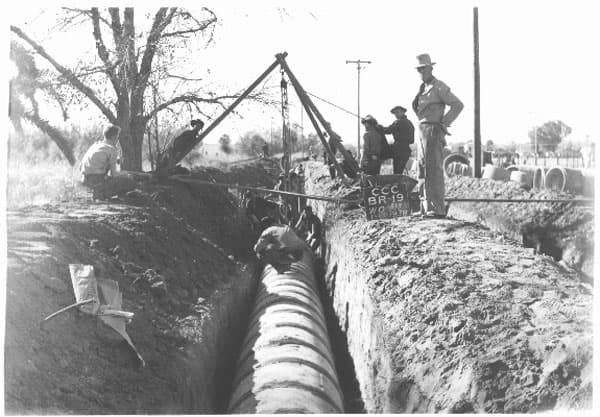
To supplement its workforce during the Great Depression, SRP contracted with the Civilian Conservation Corps (CCC) – a voluntary government work relief program – to conduct maintenance and construction work on the canal system. In less than three years, CCC workers completed over 700 jobs working with SRP and Valley communities. CCC crew projects included building fences, creating trails, constructing levees or dikes, clearing laterals, lining and piping waterways, and upgrading water control structures with stone masonry or rubble lining.
1937
The Association worked with the Arizona legislature to form the Salt River Project Agricultural Improvement and Power District (District). The District formed the second half of what became known as SRP. Established as a political subdivision of the state of Arizona, the District was able to issue municipal bonds. Proceeds from these bonds could be used to redeem outstanding higher-interest bonds, which assured the financial health of SRP during the Great Depression as well as into the future.
1939
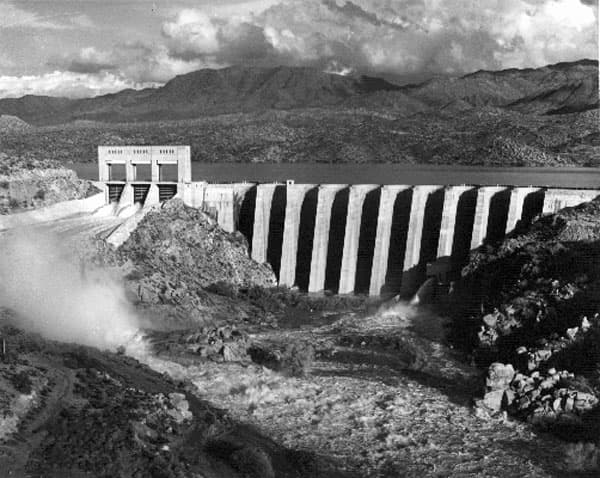
Bartlett Dam was constructed on the Verde River in 1,000 days. Bartlett was the first multiple-arch dam constructed by the Bureau of Reclamation. The new dam on the Verde improved water supplies in the midst of drought conditions and also provided much-needed labor opportunities for unemployed Arizonans during the Great Depression.
1944-1946
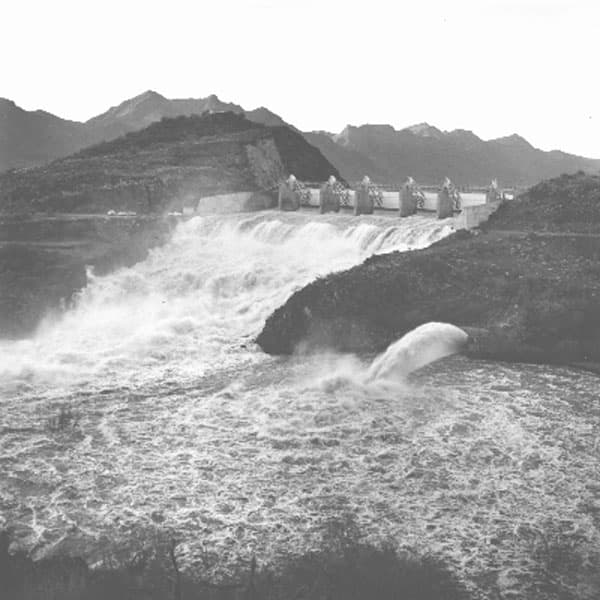
SRP and the Phelps Dodge Corporation negotiated the construction of Horseshoe Dam, the second dam on the Verde River and the sixth storage dam on SRP’s system. Phelps Dodge paid for the dam with financing from the Defense Plant Corporation to supply the water needed to meet demand for copper mining production during World War II.
1949
The District clarified its relationship with the Association as the entity responsible for the operation and maintenance of SRP’s power system. The Association retained the operation and maintenance duties for SRP’s water system below Granite Reef Diversion Dam.
1952
Valley cities began to grow and urbanize rapidly following the end of WWII, and SRP started signing contracts to deliver water directly to cities via water treatment plants. The first of these domestic water agreements was signed with the City of Phoenix in 1952. These contracts provided a stable water supply to cities as lands within SRP’s service territory transitioned from predominantly agricultural to urban water users. Today, SRP has similar contracts with 10 Valley cities.
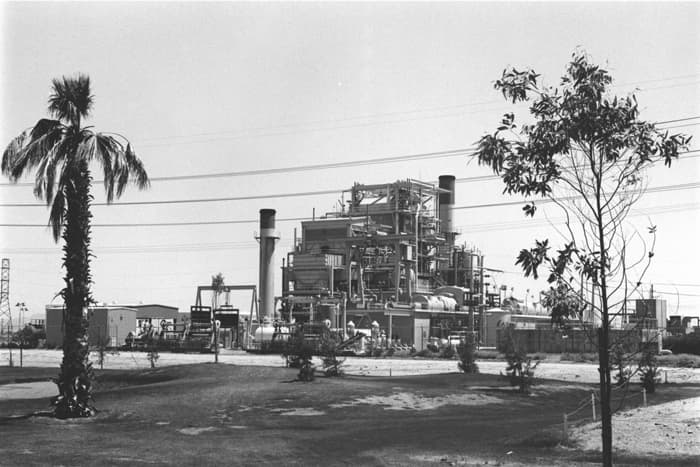
1952-1954
The first unit of Kyrene Generating Station was completed in 1952, nearly doubling SRP’s power generation capability while also improving efficiency and costs. Its importance for SRP’s power system was compared to the completion of Roosevelt Dam four decades prior. Unit 2 was completed in 1954.
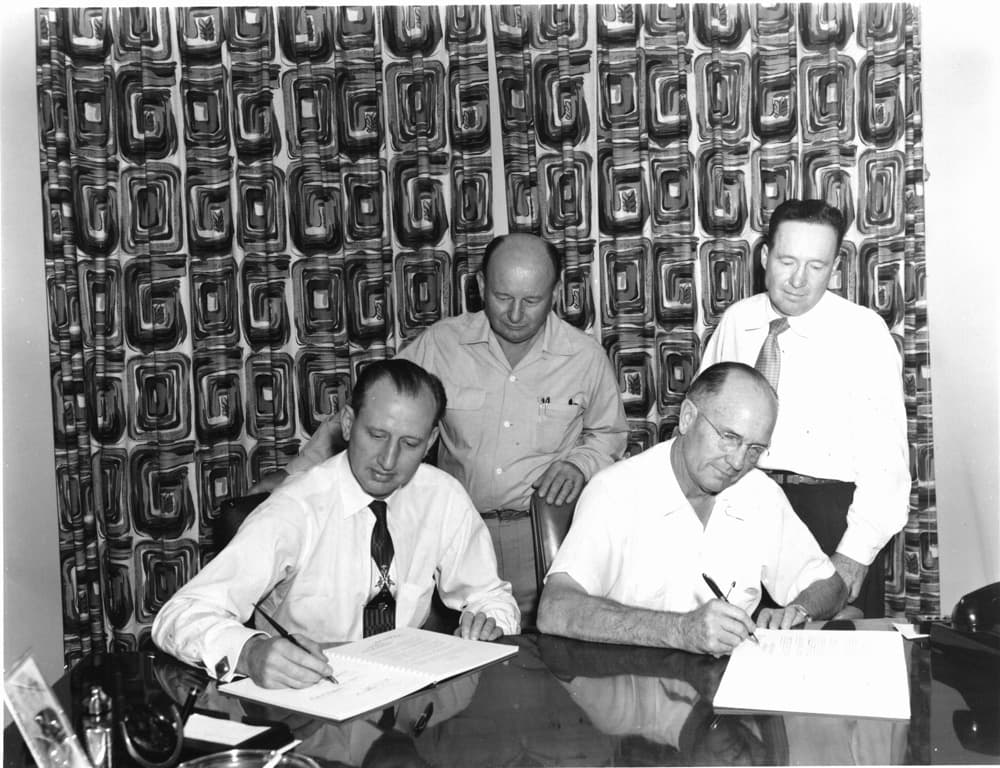
1955
SRP and APS signed the Territorial Agreement in 1955, clarifying the boundaries of each utility’s service territory. The two utilities also signed a Power Coordination Agreement that same year, emphasizing cooperation and encouraging joint system planning.
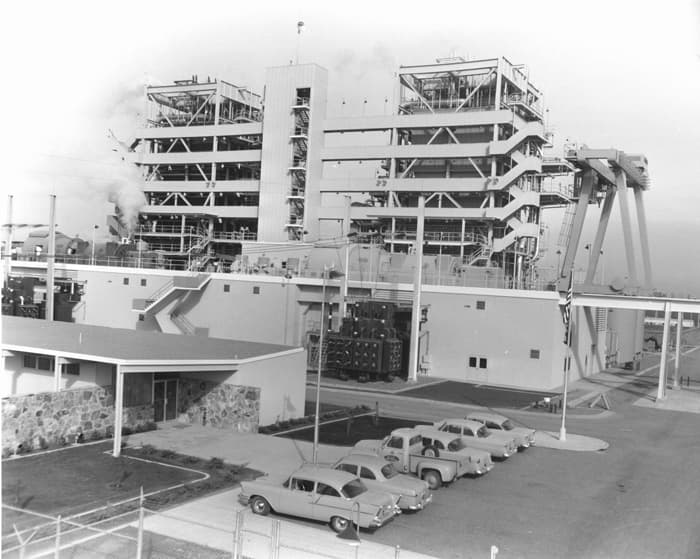
1951-1961
Agua Fria Generating Station units 1–3 are completed. Agua Fria was the second in a series of thermal generating stations constructed in the Valley to keep up with booming population growth. Additional units were added in the 1970s.
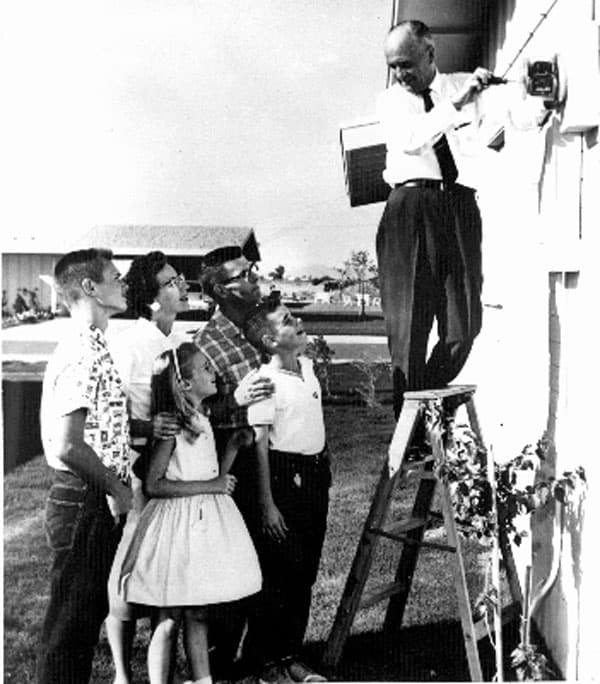
1961
The Valley continued to grow at a rapid pace, and SRP’s residential customer base nearly doubled between 1956 and 1961. In October 1961, SRP President Vic Corbell personally installed the 100,000th meter at the home of a family in Glendale.
1965
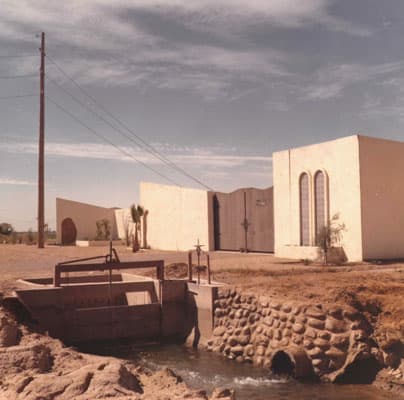
SRP launched the Community Styling program to better integrate its facilities into surrounding communities. This effort continues today and is now part of SRP’s Municipal Aesthetics Program.
1968
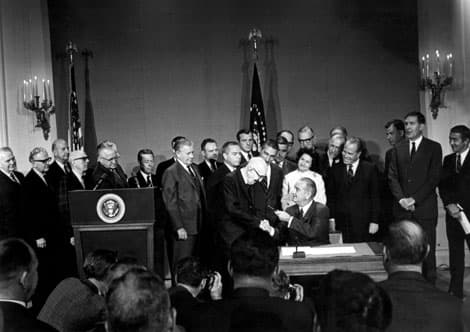
President Lyndon B. Johnson signed the 1968 Colorado River Basin Project Act authorizing the construction of the Central Arizona Project (CAP). CAP is another federal reclamation project in Arizona, and SRP lobbied heavily for its passage.
1974-1975
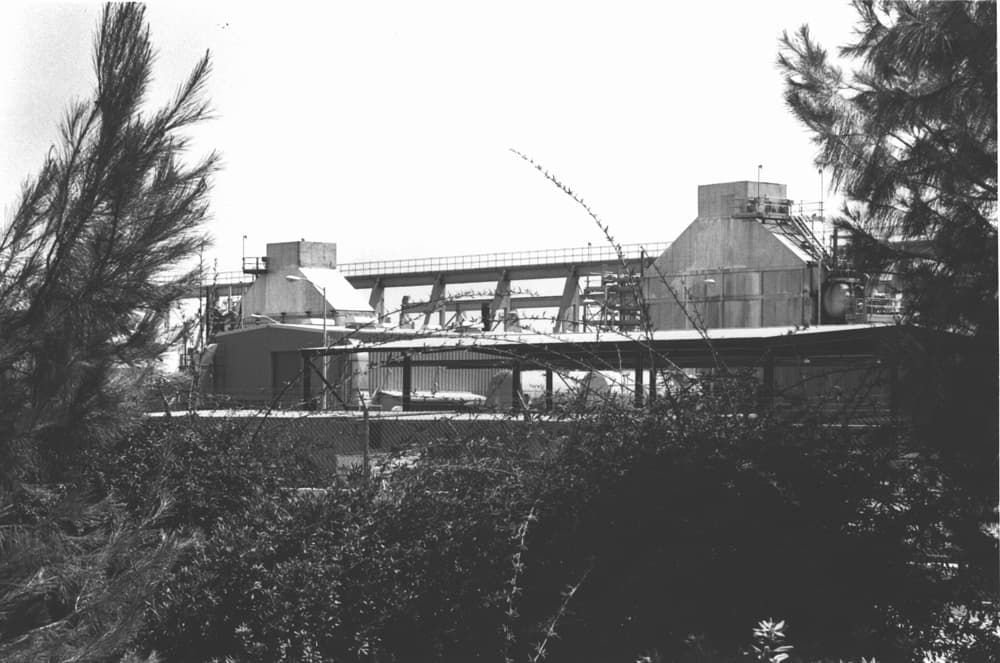
Santan Generating Station units 1–3 were completed in 1974, followed by a fourth unit in 1975. Santan was the last in a series of thermal generating stations constructed to support growth in the Valley. Additional units were added between 2005 and 2006.
1976
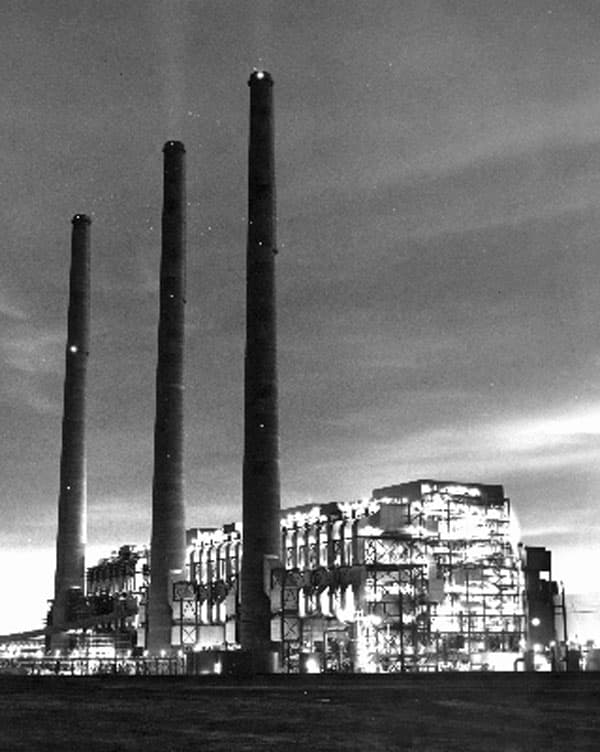
Construction of the Navajo Generating Station (NGS) in Page, Arizona, was completed. Although the plant had several other participating and owning entities, SRP oversaw the construction and operation of the plant. It was the largest construction project SRP had undertaken to that point.
1978
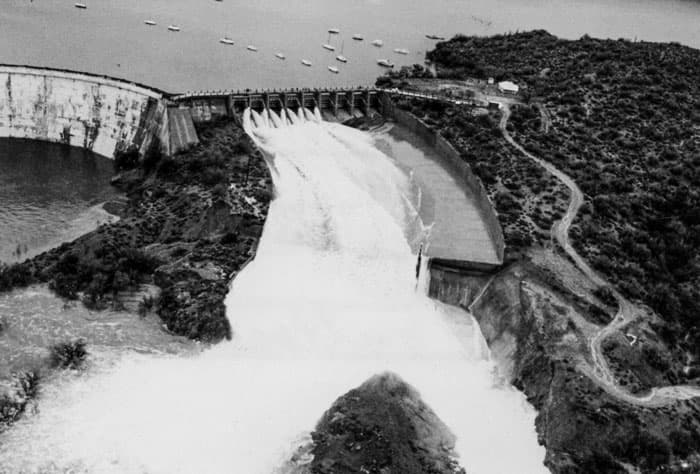
The Reclamation Safety of Dams Act was passed to bring reclamation project dams up to modern safety standards. The Act was reauthorized in 1984 and provided funding for major improvements undertaken on many of the dams on SRP’s system.
1980
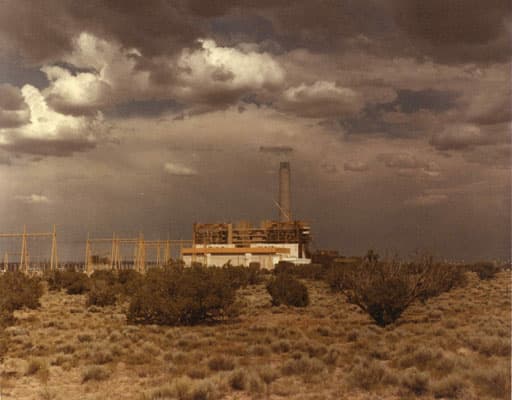
The Coronado Generating Station was completed near St. Johns, Arizona.
1984
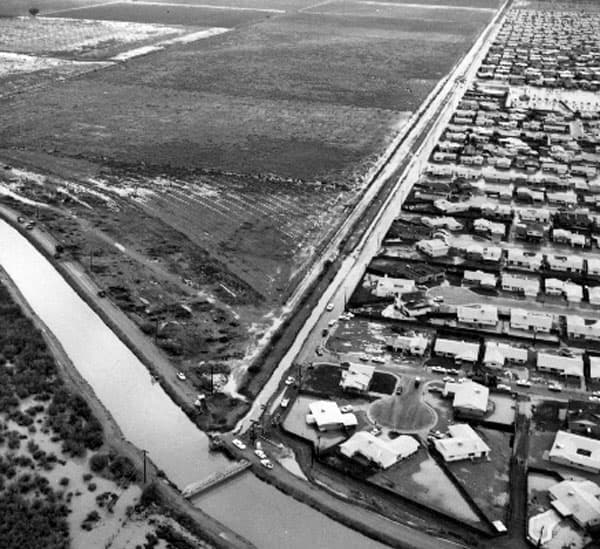
SRP’s urban water usage surpassed agricultural usage for the first time, with 55% of water deliveries going to urban areas and 45% going to agricultural customers.
1989
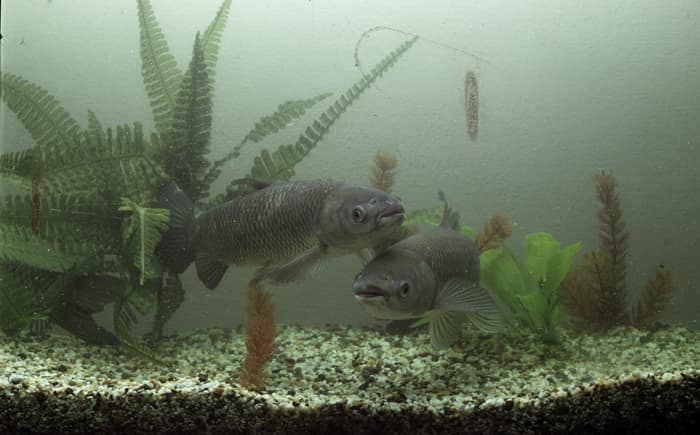
A pilot program for weed control within SRP’s canals was launched. It provided a unique solution: introducing over 1,700 white amur into portions of the Tempe and Crosscut canals. These fish can eat nearly three-quarters of their weight in weeds each day, an effective weed control method that reduces the need for chemical treatments. Controlling aquatic weed growth in SRP’s canal system has always been a challenge. Left unchecked, weeds impede water flow and reduce canal capacity. Past weed control methods included scraping canal beds with heavy chains to uproot plants, scooping vegetation with backhoes and applying herbicides.
1994
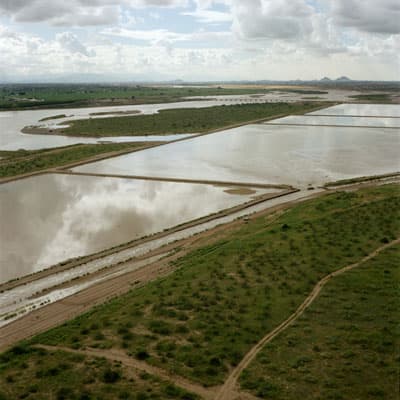
SRP began banking water at the Granite Reef Underground Storage Project (GRUSP) to ensure a reliable and adequate supply of water for the growing Phoenix metropolitan area. GRUSP was designed to enable Arizona to maximize the use of water it receives from the Colorado River. It also helps in achieving “safe yield” goals. Safe yield is the equilibrium between the amount of groundwater pumped from an aquifer and the amount recharged back into it.
1996
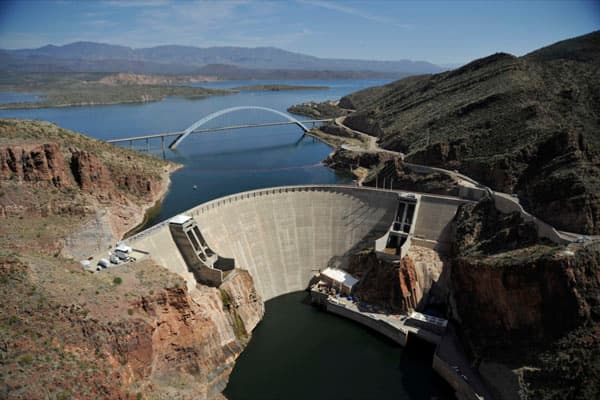
A dam modification project was completed, raising the height of Theodore Roosevelt Dam by 77 feet and adding new spillways. The project expanded the lake’s storage capacity, offering Valley cities additional water supplies while also improving flood control.
1999
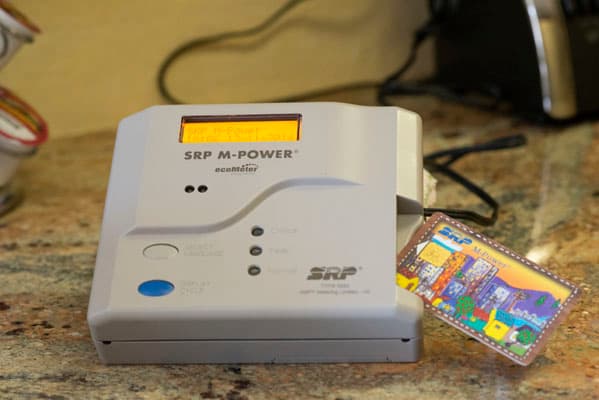
The SRP M-Power® program began, helping customers better track and control their energy usage. The program quickly grew to become the largest prepay program among U.S. utilities by 2011.
2000
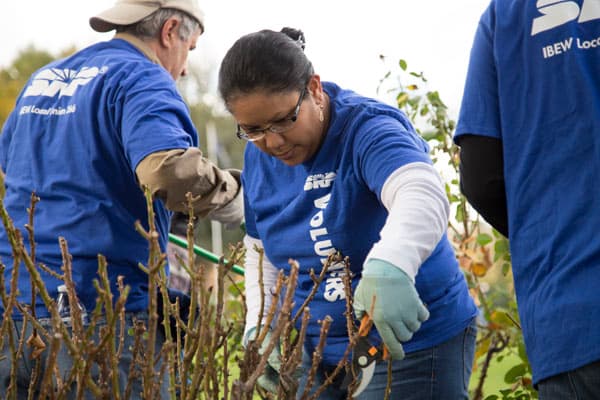
SRP received the coveted Award for Excellence in Workplace Volunteer Programs from the Points of Light Foundation based in Washington, D.C. The award is one of the world’s highest and most distinguished for community and volunteer service.
2003
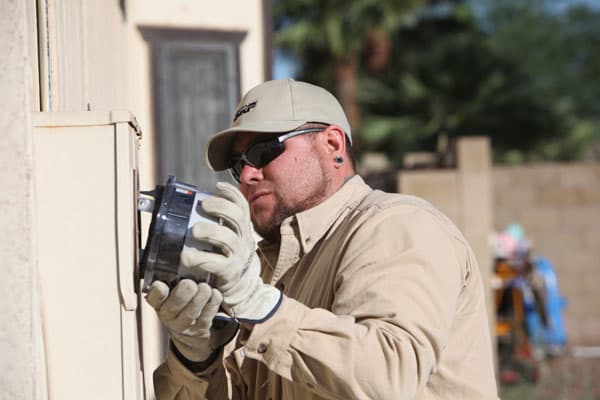
A new smart meter program was launched to improve service with faster response times and greater customer access to energy use data. The program allowed wider participation in time-of-day price plans and a variety of new service options.
2004
SRP’s Board of Directors approved a proposal directing SRP’s future use of renewable energy resources and energy conservation measures, known as the Sustainable Portfolio Principles. These portfolio targets laid the groundwork for SRP’s current 2035 Sustainability Goals.
2005
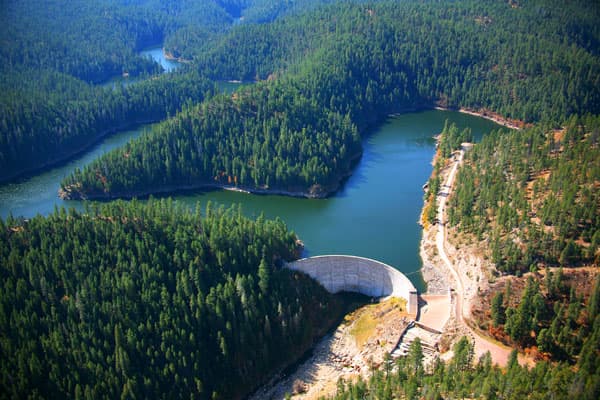
Phelps Dodge transferred operation of C.C. Cragin Dam and Reservoir (formerly Blue Ridge) to SRP as part of the Arizona Water Settlements Act of 2004. C.C. Cragin Dam helps satisfy obligations to the Gila River Indian Community, and the additional water supply helps meet water demand in northern Gila County.
2007
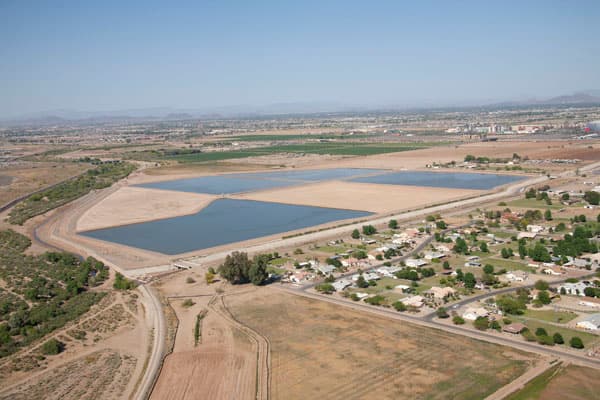
The New River-Agua Fria Underground Storage Project (NAUSP) was completed. It was the second groundwater recharge facility that SRP developed, working in partnership with Valley cities.
2008
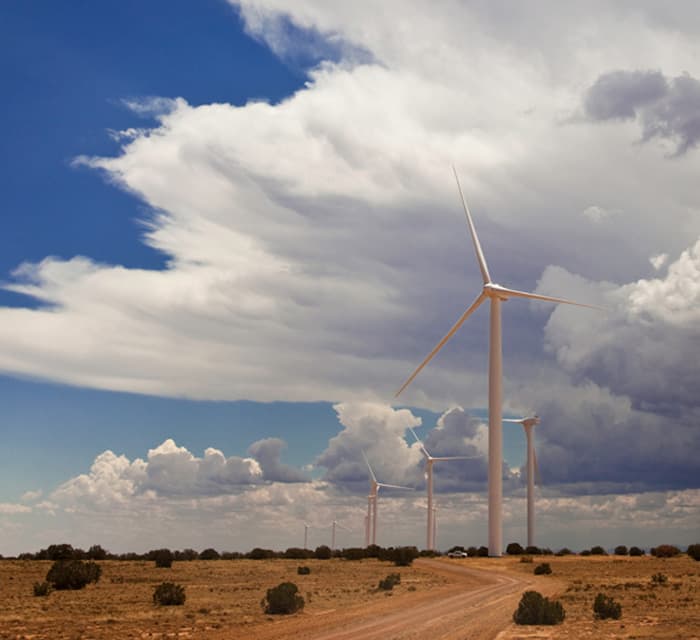
SRP bought 63 megawatts of power from the Dry Lake Wind Power Project, Arizona’s first commercial-scale wind farm.
2011
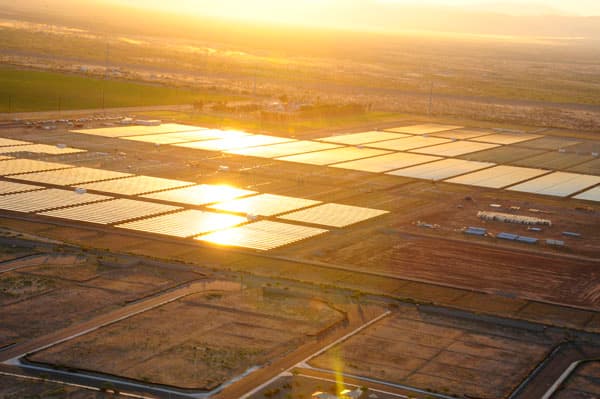
The past and future came together as Theodore Roosevelt Dam turned 100 and the Copper Crossing Solar Ranch in Florence, Arizona, was dedicated. The addition of Copper Crossing expanded SRP’s renewable energy portfolio, providing enough renewable energy to power 3,700 homes.
2012
SRP and the Gila River Indian Community (GRIC) struck a deal to allow GRIC to store and use more of its Central Arizona Project (CAP) water allocation. The agreement with GRIC provides a portion of its CAP allocation to municipal water providers as an assured water supply and SRP with access to supplemental water for its shareholders if needed.
2015
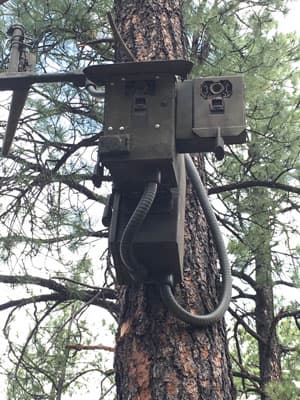
SRP Flowtography® was developed by SRP researchers to collect river and streamflow data to help manage the watersheds of the Salt and Verde rivers. SRP partners with numerous entities to expand where the monitors and gauges that collect data are installed.
2016
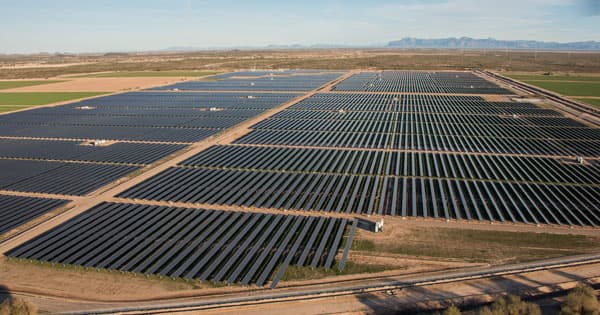
The Sandstone Solar plant opened in Florence, Arizona, adding 45 megawatts to SRP’s renewable energy portfolio.
2017
In October, SRP’s Board of Directors approved the 2035 Sustainability Goals. These goals provide a framework for moving forward sustainably while continuing to provide affordable and reliable water and power. Another milestone occurred in November, when SRP celebrated the 100th anniversary of its contractual partnership with the U.S. Bureau of Reclamation.
2018
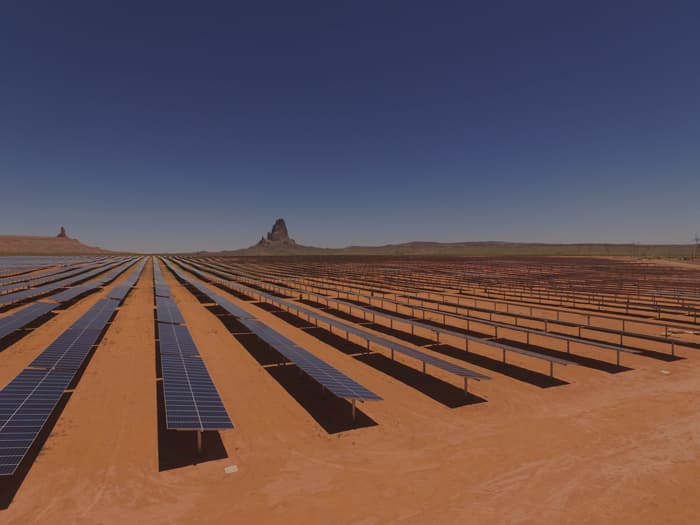
SRP signed a landmark agreement with the Navajo Tribal Utility Authority to expand the Kayenta Solar generation facility. The additional facility, called Kayenta II, expanded upon existing infrastructure and added 28 megawatts of renewable energy. The Kayenta facility now generates enough solar energy to power approximately 36,000 homes and supports electrification efforts on the Navajo Nation.
2019
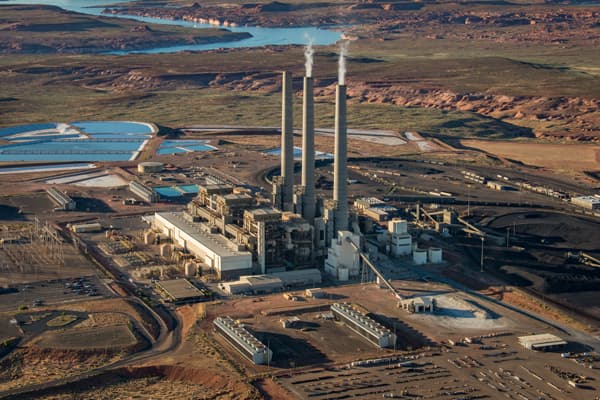
Navajo Generating Station was powered down for the last time on November 18, 2019. Following closure, a multiple-year decommissioning process began, the first of its kind undertaken by SRP. Efforts also included a significant workforce redeployment and training program for employees impacted by the plant’s closure.

2020
SRP began participating in the Energy Imbalance Market (EIM). The EIM allows SRP to benefit from low-cost wholesale energy purchased in real-time five-minute intervals.
2021
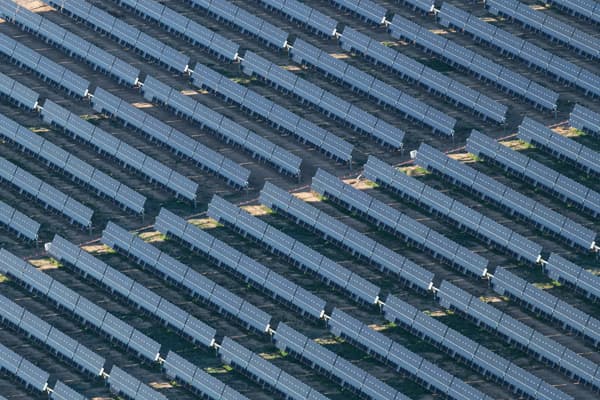
SRP launches Solar Choice program for customers interested in supporting clean energy in Arizona, enabling customers to offset half or all of their energy use with solar energy.
2022
SRP is awarded Climate Registered™ Platinum Status by The Climate Registry. Joining the ranks of U.S. climate leaders, SRP became the first electric utility in the nation to earn Platinum status for their 2020 reporting year emissions inventory.
2023
SRP launches its Sustainable Cities Program. Partnering with Phoenix, Mesa, Tempe and Gilbert, this pilot program provides a structure to understanding and demonstrating their efforts around sustainability.
RELATED TOPICS
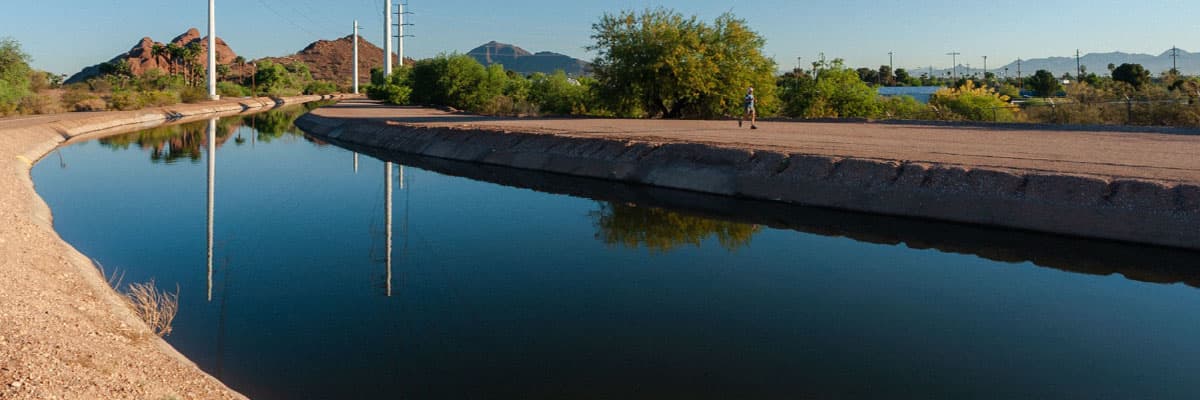
About Salt River Project | SRP
SRP is a community-based, not-for-profit organization providing affordable water and power to more than 2 million people in central Arizona. Read more here.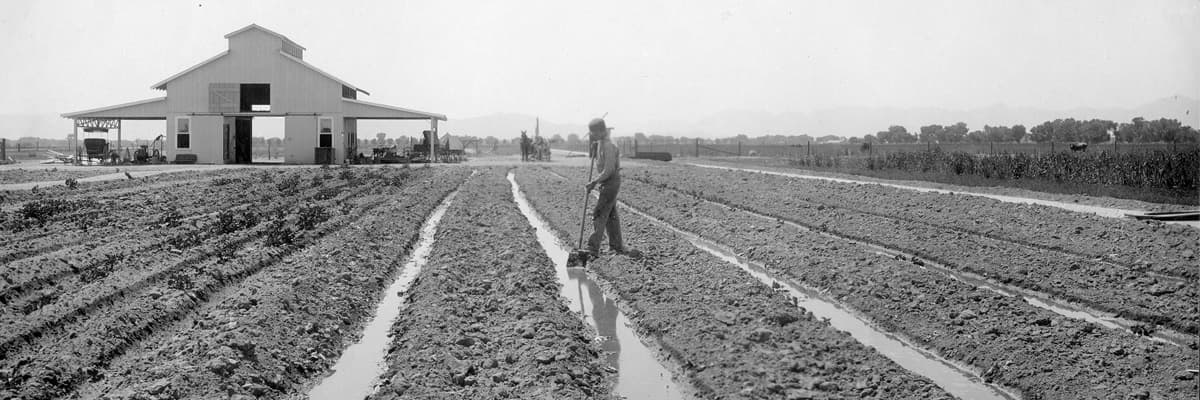
History of Salt River Project | SRP
Since 1903, Salt River Project has helped shape our state. Learn about our history of service to the people who call Arizona home.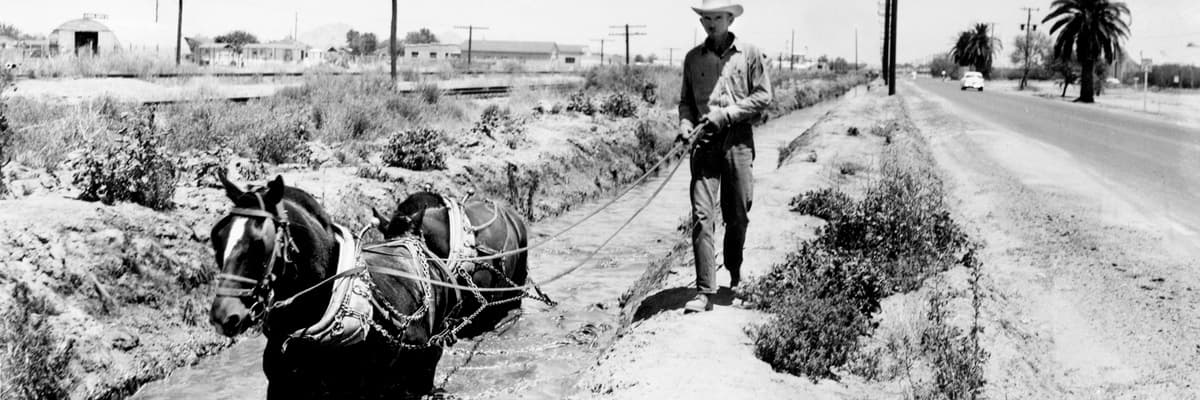
History of canals in Arizona | SRP
SRP has a long-standing relationship with water in the Valley, but our chapters are only a piece of the story.


